




Confused between Graphic Design and UI UX Design? Read this comprehensive guide on the key differences between these two design niches below!
SUMMARISE WITH:


When you enter the world of digital design and the careers within it, you must have encountered career paths like "Graphic Designer," "UI Designer," "UX Designer," and "Product Designer." It looks confusing, we know. You might think, what do these job roles mean? To an untrained eye, they may all look the same. They may all seem like jobs where you make things look good. But that’s far from the truth.
While all these roles do share the same foundation of aesthetics, color theory, and typography, the difference lies in their purpose and applications. While graphic design focuses on communicating a message through visuals, UI UX design focuses on the functionality and feeling of a digital product.
In 2026, digital design is a gold mine that can help you harvest a rewarding career. If you are wondering which of these design fields to choose and looking for the right fit for you, this blog will help you understand the difference between Graphic Design and UI UX Design.
Read on for a detailed breakdown of Graphic Design vs UI UX Design, while exploring salary differences, job roles, and which suits your personality the most!
- What is Graphic Design?
- What is UI UX Design?
- Graphic Design vs UI UX Design - Key Differences
- Graphic Designer vs UI UX Designer - Work & Roles
- How do Salaries Differ for UI UX Designers and Graphic Designers?
- How to Transition from Graphic Design to UI UX Design?
- Which is Right for You - Graphic Design or UI UX Design?
- Conclusion & Next Steps
What is Graphic Design?
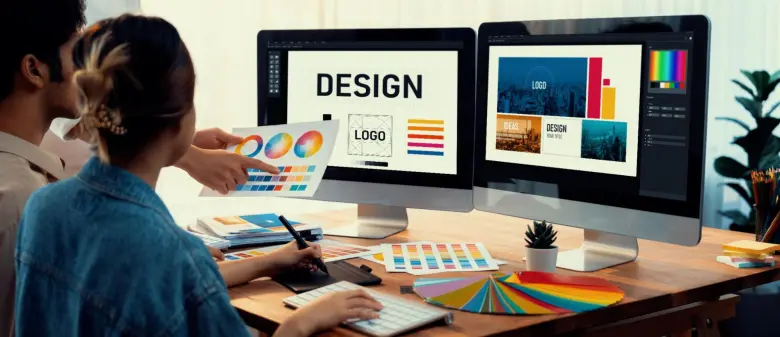
Graphic Design is the art of visual communication. It focuses on conveying a specific message, emotion, or brand identity to a user through imagery, text, and layout.
Graphic Design is often considered the foundation of a brand’s voice. From social media to product packaging, graphic design plays a crucial role in ensuring that people see and remember your brand. Historically, graphic design was strictly print-based and was used predominantly in magazines and posters. Today, graphic design also thrives in digital media and is a crucial aspect of brands trying to build their identity and increase their recall value.
Key Features
Here are the key features defining Graphic Design -
- Visual Assets - Graphic Design centers on producing strategic, fixed visual assets. This includes elements like logos, brochures, packaging design, posters, and typography, serving as tangible touchpoints for a business.
- Brand Identity - Graphic designers speak a brand’s visual language. They ensure absolute consistency across all channels, from specific HEX color codes to font style and sizes. They ensure everything aligns with the brand image, ultimately building consumer trust and brand recall.
- Marketing-Driven Intent - Graphic Design is about visual persuasion. Its primary objective is commercial, as in, it utilizes imagery and text to inform audiences, influence purchasing decisions, and drive specific marketing goals.
- Artistic Composition - Graphic designers utilize visual hierarchy, balance, and white space to guide the viewer’s eye to where they want. They ensure layouts are aesthetically pleasing and evoke the desired emotional response from the target audience.
What is UI UX Design?
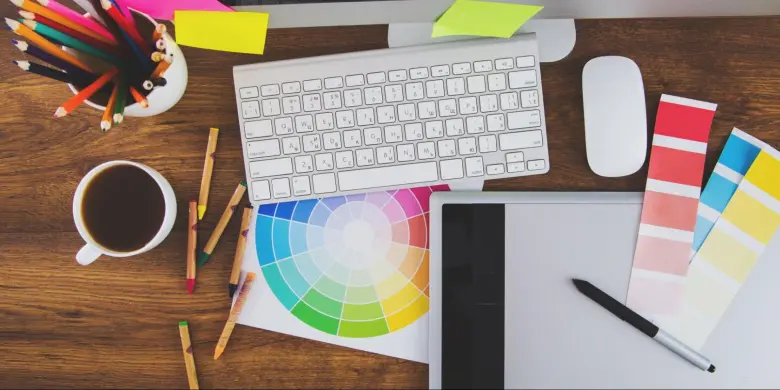
UI UX Design is where things get a bit more technical. Independently, UI Design refers to the visual layout of the application, such as buttons, sliders, color schemes, and typography. On the other hand, UX Design utilises psychology, research, and logic to understand user behavior and experience when interacting with a product. They act like two halves of a whole.
Together, UI UX Design is about creating functional, usable, and enjoyable digital products. It deals with how users interact with a product and how they feel while using it.
Key Features
Here are the key features defining UI UX Design -
- Interactive Elements - UI UX design focuses on interactivity and responsiveness. It defines how an interface behaves based on user input, managing complex states like hovers, transitions, and micro-interactions to provide immediate feedback and guidance.
- User-Centric Problem Solving - The core objective of UI UX design is to reduce friction and facilitate task completion. Designers map out logical user flows to ensure complex goals can be achieved intuitively and efficiently.
- Data-Driven Decision Making - UI UX Design choices are often less subjective and more objective. It involves design strategies that are validated through user testing, heatmaps, and analytics to ensure the interface performs well and meets measurable business goals.
- Different Dynamic Systems - UI UX designers build scalable design systems rather than single pages. This ensures the interface adapts fluidly across different devices such as mobiles and desktops, while maintaining functional and visual consistency.
Graphic Design vs UI UX Design - Key Differences
Here are the key differences between Graphic Design and UI UX Design tabulated below.
Feature |
Graphic Design |
UI UX Design |
Goal |
To communicate a message or brand identity. |
To help the user accomplish a task efficiently. |
Medium |
Can be printed or digital. |
Strictly digital. |
User Relationship |
The user visually consumes the design. |
The user interacts with the design. |
Tools |
Adobe Photoshop, Illustrator, InDesign. |
Figma, Sketch, Adobe XD, Protopie. |
Focus |
Visual aesthetics, alignment, creativity. |
Usability, information architecture, logic, navigation. |
Output |
Static images or layouts. |
Wireframes, prototypes, and live code interfaces. |
Longevity |
Often changing and campaign-based. |
It is iterative, being constantly updated and improved. |
What are the Similarities Between the Two?
While Graphic Design and UI UX Design are fundamentally different, they also share some similarities.
- Core Focus on Emotional Design - Both disciplines aim to shape user sentiment and evoke emotions. Graphic design utilizes aesthetics to evoke feelings about the brand, while UX design targets behavioral satisfaction, ensuring users feel satisfied using a product.
- Shared Visual Fundamentals - Regardless of the medium, foundational design principles remain constant. Mastery of typography, color theory, grid systems, and visual hierarchy is essential in both fields to create balanced and aesthetic layouts.
- Software Ecosystems - While specific software varies, both disciplines rely heavily on vector-based logic and layer management. Understanding how to manipulate shapes, paths, and components digitally is a transferable technical skill between the two design fields.
- Conceptual Problem Solving - Both roles rely on the ability to transform abstract requirements into tangible solutions. Whether crafting a visual identity or a navigation flow, the underlying cognitive process involves creative ideation to solve a business problem.
Graphic Designer vs UI UX Designer - Work & Roles

Understanding the daily operations and roles within Graphic Design and UI UX Design is essential for career planning. Below, we have explained the workflow, collaboration style, and departmental positioning to help you gain a better understanding of how work differs between the two.
Job Role of a Graphic Designer
A graphic designer usually works within a Marketing or Creative team. Their job responsibilities often involve -
- Generating static visual assets, including comprehensive branding systems, advertising collateral, editorial layouts, and high-volume social media creatives.
- Collaborating closely with Copywriters, Marketing Managers, and Creative Directors to align visual outputs with broader promotional narratives.
- Evaluating success based on adherence to brand guidelines, immediate visual impact, and the ability to meet marketing campaign deadlines.
Job Role of a UI UX Designer
A UI UX designer usually sits with the Product or Engineering team. Their job responsibilities often involve -
- Executing the end-to-end design lifecycle, ranging from conducting initial user research and sketching low-fidelity wireframes to building high-fidelity interactive prototypes.
- Engaging in technical collaboration with Product Managers to define feature requirements and with Developers to ensure the design is code-feasible.
- Measuring performance through quantitative data metrics, specifically looking at improvements in user retention, conversion rates, and task completion success.
How do Salaries Differ for UI UX Designers and Graphic Designers?

To further differentiate between the two, let us briefly look at how salaries vary among roles within these design disciplines.
Graphic Designer Salaries
- Junior (0-2 Years) - ₹3,50,000 to ₹6,00,000 LPA
- Mid-Level (3-5 Years) - ₹6,00,000 to ₹10,00,000 LPA
- Senior/Art Director (5+ Years) - ₹12,00,000 to ₹20,00,000+ LPA
Also Read: Ultimate Guide to Graphic Design Salaries
UI UX Designer Salaries
- Junior (0-2 Years) - ₹5,50,000 to ₹9,00,000 LPA
- Mid-Level (3-5 Years) - ₹10,00,000 to ₹18,00,000 LPA
- Senior/Product Designer (5+ Years) - ₹22,00,000 to ₹45,000,000+ LPA
Also Read: UI UX Designer Salary Guide
Sources: Glassdoor, AmbitionBox, Naukri.com
Note - Salaries fluctuate heavily based on location, skills, and the quality of the portfolio.
How to Transition from Graphic Design to UI UX Design?
If you are already working in Graphic Design and want to pivot to UI UX Design, here is a brief guide to help you make the transition.

- Mindset Shift - Stop thinking about how it looks and start thinking about how it works. This requires shifting focus from the final image to the user's journey.
- Master Figma - While Adobe is great, the industry standard for UI UX Design is Figma. Start learning its nuances and get comfortable with Auto-Layout, Variables, and Components.
- Learn User Research - This is the biggest gap for graphic designers. You need to let the briefs go and focus on learning how to conduct user interviews, create user personas, and do usability testing. You have to develop an understanding of the user to design for them.
- Develop Tech Skills - You don't need to be a coder to be a UI UX designer, but you must understand how HTML and CSS work. This familiarizes you with constraints so you don't end up designing things that are impossible to build.
- Update Your Portfolio - You cannot apply for UI jobs with logo designs alone. You need to develop Case Studies. A case study is less about your design and more about your process. Think of questions like - What was the problem? How did you research it? How did you design the solution? What was the result? You can also check out this project by AND Learner, Tanya Jain, for inspiration.
Which is Right for You - Graphic Design or UI UX Design?
Still wondering which design field is a better fit for you? Here are some indicative factors, preferences, and personality traits to help you decide between Graphic Design and UI UX Design as potential career paths.
Pursue Graphic Design If:
- You like working with visual expression, illustration, and experimental typography.
- You prefer short-term projects with high variety. For example, branding one week, packaging the next.
- Your goal is to evoke immediate reactions or tell visual stories.
- You prefer owning the visual execution with less reliance on technical dependencies.
Pursue UI UX Design If:
- You enjoy logic, systems thinking, and solving complex architectural problems.
- You are interested in psychology and understanding why users behave the way they do.
- You thrive in cross-functional teams and enjoy the dialogue between design, business, and engineering.
- You are comfortable with designs being tested, broken, and improved constantly based on data.
Conclusion & Next Steps
We hope this comprehensive list of differences between Graphic Design and UI UX Design helped you distinguish the nuances of these design fields. If you are planning to choose between the two, understanding how they differ is crucial to making an informed decision about your career path.
In case you think you need further assistance, here are some of our resources to consider:
- Watch this session by Shiva Viswanathan, Design Head of Ogilvy Pennywise, and Naman Singh, Product Experience Designer at RED.L
- Talk to a course advisor to discuss how you can transform your career with one of our courses.
- Pursue our UI UX Design courses - all courses are taught through live, interactive classes by industry experts, and some even offer a Job Guarantee.
- Take advantage of our scholarship and funding options to overcome any financial hurdle on the path to your career transformation.
Note: All information and/or data from external sources is believed to be accurate as of the date of publication.