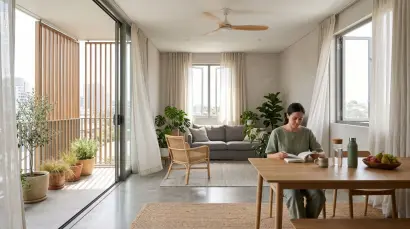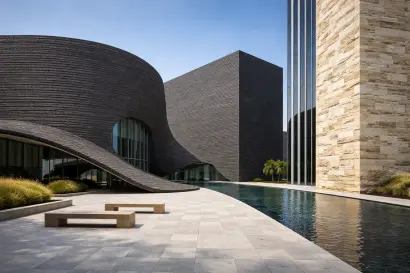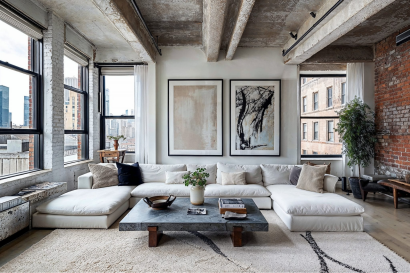






When you walk into a room with soaring ceilings, your body likely reacts before your mind can catch up. There’s a subtle expansion in attention, a sense of openness that feels almost physical. Now, if you step into a low-ceilinged space, the effect shifts again. It’s more contained, more focused, sometimes comforting, and sometimes constraining, depending on the dimensions.
SUMMARISE WITH:


When you walk into a room with soaring ceilings, your body likely reacts before your mind can catch up. There’s a subtle expansion in attention, a sense of openness that feels almost physical. Now, if you step into a low-ceilinged space, the effect shifts again. It’s more contained, more focused, sometimes comforting, and sometimes constraining, depending on the dimensions.
These restrictions are rooted in environmental psychology and the way the human brain interprets spatial boundaries. Interior design isn’t only about what a space looks like, but how its proportions shape thought, emotion, and behavior.
- How Room Proportions Affect Human Behavior and Mood
- Designing With High Ceilings for Expansion, Light, and Psychological Lift
- Designing With Low Ceilings for Intimacy, Focus, and Emotional Containment
- Ceiling Height & Emotional Spectrum of Comfort and Grandeur
- Ceiling Height & Psychology: Evidence-Based Design
- Light, Sound, and Vertical Perception
- Transitional Spaces and Ceiling Height Shifts
- Cultural Perspectives of Ceiling Height
- The Role of Furniture and Object Scale in Ceiling Height
- Impact of Ceiling Height on Psychological Comfort and Personal Space
- How to Apply These Principles in Real Spaces?
- Frequently Asked Questions
- Summing Up: Turning Spaces Into Feeling
How Room Proportions Affect Human Behavior and Mood
Humans constantly read space. You assess distance, enclosure, and scale in milliseconds, often without even realizing it. This is an evolutionary response tied to survival, helping you understand whether a space is safe, open, or restrictive.
Ceiling height plays a surprisingly consistent role in cognitive and emotional processing. Some studies have found that higher ceilings tend to encourage more abstract thinking, while lower ceilings promote more concrete, detail-oriented thinking.
This means spatial volume subtly primes how people think. High ceilings tend to encourage expansive thinking and creativity, increase perceived freedom and openness, while supporting activities involving ideation and imagination.
Conversely, low ceilings encourage focus and attention to detail, increase perceived safety and containment, and support tasks requiring concentration and precision. While these effects are cognitive, they’re also emotional. High ceilings often feel uplifting. Low ceilings can feel grounding, but if poorly designed, they may feel restrictive or heavy.
The key variables are height, proportion, and balance. A room that feels too tall and empty can feel disconnected. A room that’s too low and dense can feel compressed. Human comfort exists somewhere in between.
Designing With High Ceilings for Expansion, Light, and Psychological Lift
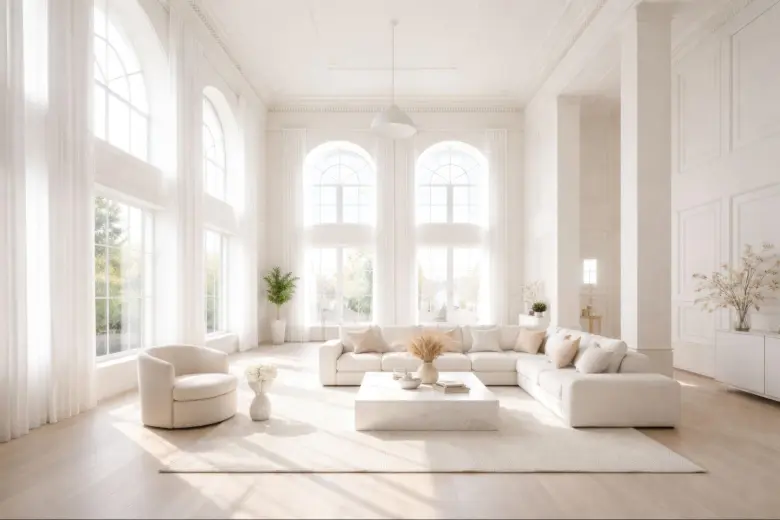
High ceilings are often associated with luxury, but their psychological effects go far beyond aesthetics. They change how people orient themselves in space.
The most immediate effect is perceptual expansion. The vertical boundary is farther away, which increases perceived openness. This often leads to a subtle shift in mental processing, making you less focused on immediate detail and more open to context and possibility.
But high ceilings also introduce challenges. Without careful design, they can feel disconnected or emotionally cold. Design strategies for high ceilings often focus on anchoring the space:
- Lighting is brought downward using pendants, chandeliers, or layered fixtures.
- Vertical elements, like tall shelving or drapery, visually bridge the floor and ceiling.
- Materials are used to reduce echo and add warmth, such as wood, fabric, or acoustic finishes.
- Furniture grouping creates human-scale zones within large volumes.
High-ceiling spaces are particularly effective for living rooms designed for entertaining, creative studios, ideation spaces, entryways meant to create first impressions, and cultural or public environments, like galleries, hotels, and atriums.
There’s also a psychological dimension. Natural light behaves differently in tall spaces, often diffusing more broadly. This can enhance mood regulation, particularly in climates or seasons with limited sunlight exposure.
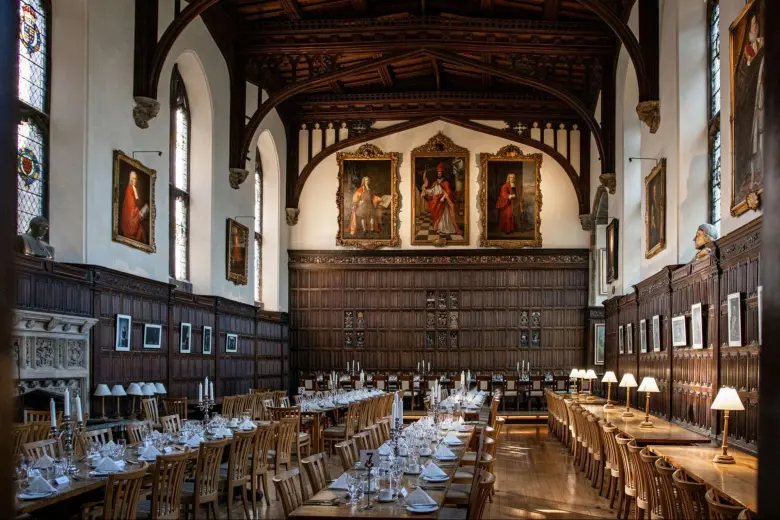
Image Courtesy: Unsplash
Designing With Low Ceilings for Intimacy, Focus, and Emotional Containment
Low ceilings are often misunderstood as a limitation when they can be one of the most powerful tools for creating emotional warmth. A lower ceiling brings the upper boundary of a room closer to the body's spatial awareness field. This increases perceived enclosure, which can translate into comfort, focus, or even coziness depending on design execution.
This is why many intimate spaces naturally rely on vertical scale, such as bedrooms, dining rooms, small lounges, and libraries or reading corners. The psychological effect here is “refuge,” that is, a sense of being held by the environment.
However, low ceilings can quickly become uncomfortable if not handled carefully. Compression becomes the risk.
Design strategies that help low ceilings feel better include:
- Using lighter ceiling tones to visually lift the height
- Keeping furniture lower to increase perceived vertical space
- Emphasizing horizontal continuity with long lines and consistent sightlines
- Adding vertical accents to guide the eye upward without overwhelming the space
Even lighting becomes critical. Flush fixtures or recessed lighting are often used to avoid reducing perceived height further.
When done well, low-ceiling spaces feel calm, grounded, and psychologically safe. When done poorly, they feel heavy or restrictive.
Ceiling Height & Emotional Spectrum of Comfort and Grandeur
Ceiling height is one of the most direct tools for shaping emotional tone in interior design. It operates along a spectrum rather than a binary. At one end is intimacy and at the other is grandeur.
Intimacy is defined by closeness, familiarity, and emotional ease. It often emerges in spaces where ceiling height is reduced or visually compressed. These environments encourage conversation, relaxation, and personal connection.
Intimate design tends to rely on:
- Lower perceived vertical volume
- Softer lighting
- Closer furniture groupings
- Enclosed spatial boundaries
By contrast, grandeur is about scale and impact. High ceilings expand perception upward and outward, shifting attention away from immediate human scale and toward architectural experience.
This creates a sense of awe or reverence, heightened visual drama, and strong spatial memory. But grandeur risks emotional distance. If not balanced, large vertical spaces can feel impersonal.
The most effective interiors rarely choose one extreme. Instead, they layer both. A home might feature:
- A high, open living space for gathering
- Lower, more enclosed bedrooms for rest
- Transitional zones that mediate between the two
This variation creates rhythm in experience. Spaces feel different because they are different.

Ceiling Height & Psychology: Evidence-Based Design
Environmental psychology consistently supports the idea that spatial volume influences cognition and emotion. A key framework is the prospect-refuge theory, developed by Jay Appleton. It suggests humans prefer environments that balance visibility and openness with shelter and enclosure.
Ceiling height directly influences this balance. High ceilings increase prospect, while low ceilings increase refuge. Healthy design often blends both within a single environment.
Another important body of research comes from environmental cognition studies, which show that spatial cues can influence creative thinking vs. analytical thinking, stress levels in enclosed environments, and perceived control within a space. Open, tall environments are associated with increased creativity and abstract reasoning, while more contained environments support focus, precision, and analytical thinking. These findings have been applied in workplaces, schools, and even retail environments to subtly guide behavior and engagement.
There are also psychological implications. Larger volumes can increase alertness but may also raise cognitive load if overstimulating, particularly in noisy or visually complex environments. Smaller volumes can feel calming and controlled, though they may trigger discomfort if perceived as too confined. In this sense, ceiling height becomes part of a broader system of environmental regulation, influencing how the body and mind respond to space.
Light, Sound, and Vertical Perception
Ceiling height constantly interacts with light and sound, shaping how people experience space. In high-ceiling environments, natural light tends to diffuse more broadly, often creating a softer, more atmospheric quality.
Big windows and skylights allow more natural light in, and well-lit spaces feel larger and more open, increasing the perception of space. However, artificial lighting must work harder to maintain balance, as the increased vertical distance can lead to uneven illumination or shadowed areas if not carefully planned.
Sound also behaves differently. Taller spaces typically have longer reverberation times, which can amplify noise and create echo. This can feel energizing in some contexts, such as social or public spaces, but overwhelming in others, particularly where focus is required. Materials are critical here. Soft finishes like textiles, rugs, and acoustic panels help absorb sound and restore comfort.
In lower-ceiling spaces, the opposite tends to occur. Light is more concentrated, which can feel warm and inviting, but may also become harsh if not diffused properly. The interplay between these elements reinforces the psychological impact of ceiling height, making it clear that vertical space must always be considered as part of a larger sensory system.
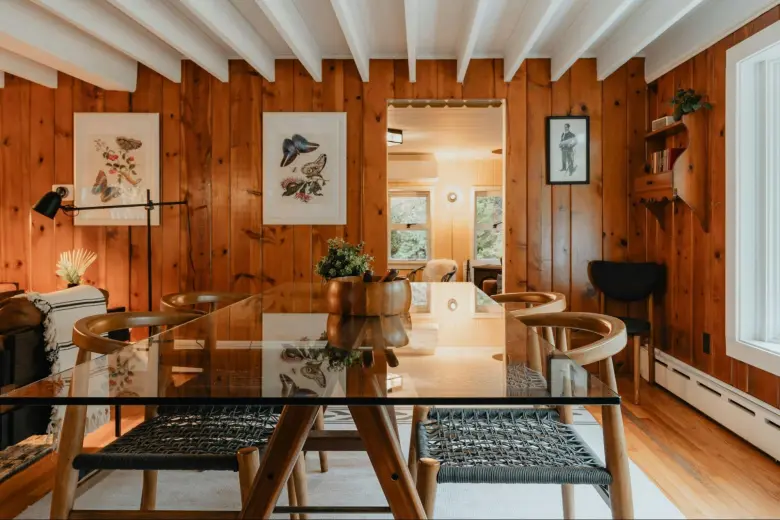
Image Courtesy: Unsplash
Transitional Spaces and Ceiling Height Shifts
One of the most overlooked design strategies is the intentional use of ceiling height transitions. Moving from a lower-ceilinged space into a higher one can create a powerful sense of release. The contrast enhances the perception of openness, making the larger space feel even more expansive.
This technique is commonly used in residential design, where entryways or hallways may have slightly lower ceilings that open into a double-height living area. The experience is subtle but effective. It guides movement, builds anticipation, and creates a natural spatial hierarchy.
Similarly, transitioning from high to low ceilings can signal a shift from public to private space. A large, open living area might lead into a more intimate bedroom or study, where the reduced height supports relaxation and focus. These changes don’t need to be dramatic to be effective. Even small variations can influence how a space is perceived and used.
Cultural Perspectives of Ceiling Height
Perception of space isn’t entirely universal. Cultural context shapes how ceiling height is interpreted and valued. In many Western architectural traditions, high ceilings are associated with wealth, status, and prestige. Historically, grand halls, churches, and institutional buildings used vertical scale to communicate power and importance.
In contrast, some Eastern design philosophies place greater emphasis on intimacy, balance, and human scale. For example, traditional Japanese interiors often feature lower ceilings combined with carefully controlled proportions and natural materials. This results in a space that feels grounded.
These differences highlight that there’s no single “ideal” ceiling height. What feels comfortable or desirable depends on cultural expectations, lifestyle, and context. Good design responds to these factors rather than imposing a one-size-fits-all approach.
The Role of Furniture and Object Scale in Ceiling Height
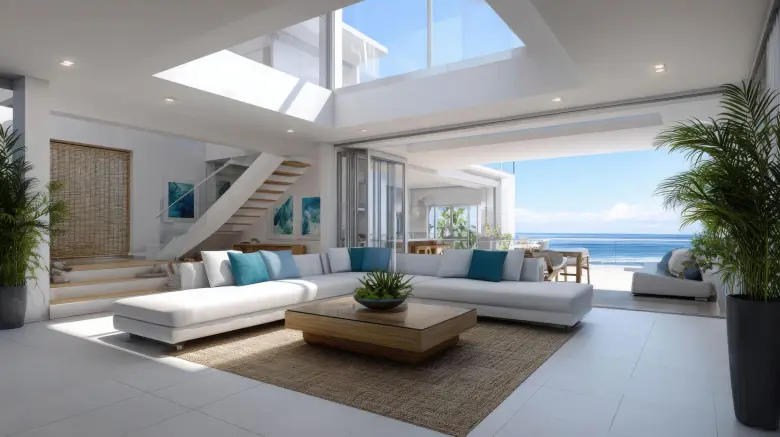
Furniture is crucial for how ceiling height is perceived. In high-ceiling spaces, undersized furniture can make the room feel even larger and more disconnected, while appropriately scaled or slightly oversized pieces help anchor the space and create balance.
In lower-ceiling environments, the opposite is true. Bulky or tall furniture can exaggerate the feeling of compression, making the space feel smaller than it actually is. You could counteract this by placing bulky furniture on the outskirts of the room to create more space in the middle. On the other hand, lower-profile pieces increase the visible distance between floor and ceiling, subtly enhancing the perception of height.
Object placement also matters. Artwork, shelving, and decorative elements can either emphasize verticality or disrupt it. When aligned thoughtfully, these elements guide the eye and shade how the entire room is experienced.
Impact of Ceiling Height on Psychological Comfort and Personal Space
Ceiling height also intersects with how people perceive personal space. In environments with higher ceilings, individuals often feel less crowded, even when the floor area remains the same. The added vertical volume creates a sense of spatial generosity, which can reduce feelings of confinement.
In lower-ceiling spaces, personal space becomes a more closely tied layout and furniture arrangement. If the room is well-organized and uncluttered, it can still feel comfortable and inviting. If not, the reduced vertical clearance can amplify feelings of crowding or tension.
This is particularly important in shared environments such as offices or small homes, where multiple people occupy the same space. Thoughtful design can mitigate these effects, ensuring that even compact areas feel liveable and supportive.
How to Apply These Principles in Real Spaces?
Understanding the psychology of ceiling height is only valuable if it translates into real-world design decisions. In practice, this means aligning spatial volume with the intended use of each room.
A workspace designed for brainstorming may benefit from higher ceilings or at least the illusion of vertical openness. By contrast, a bedroom may feel more comfortable with a slightly lower ceiling or visual elements that create enclosure. Social areas often sit somewhere in between, balancing openness with warmth.
It also means working with constraints rather than against them. Not every space can have dramatic ceiling heights, but nearly every space can be adjusted through lighting, color, proportion, and material to achieve the desired psychological effect.
While ceiling height is an architectural feature, it’s also a tool for shaping experience. When used thoughtfully, it allows designers to create spaces that feel intuitive, supportive, and deeply aligned with human needs.

Frequently Asked Questions
Does ceiling height really affect mood?
Higher ceilings tend to create feelings of openness and freedom, while lower ceilings promote comfort and focus. The effect depends on lighting, proportions, and design. Poorly balanced spaces can feel overwhelming or restrictive regardless of height.
Can you make a low ceiling look higher?
Using light colors, low-profile furniture, vertical design elements, and features like raised skylights or recessed details can draw the eye upward and create the illusion of added height.
Are high ceilings always better in interior design?
Not necessarily. High ceilings suit open, social, or creative spaces, but can feel cold if not well-designed. Lower ceilings are ideal for intimate or focused environments.
Summing Up: Turning Spaces Into Feeling
Ceiling height may seem like a fixed structural element, but it's actually one of the most fluid psychological tools in interior design. It quietly shapes how you think, interact, and feel within a space, whether that’s inspired and open beneath a high ceiling or calm and grounded in a lower one. Successful interiors use space intentionally, creating environments that respond subtly and powerfully to human behavior.
If you want to learn more about interior design, explore AND Academy’s Interior Design Courses. Choose from a Diploma in Interior Design or a PG Diploma in Interior Design to embark on your journey! Our online courses will teach you how to use spatial volume to create spaces that are aligned with your client’s needs!
Talk to our course advisors to know more!
This Blog was authored by Peter Chambers, an associate editor at Renovated with over 5 years of experience helping readers create beautiful, functional spaces on a budget.
Note: All information and/or data from external sources is believed to be accurate as of the date of publication.