




Read to learn about 10 industry-leading UI UX designers shaping 2026. Learn from their expertise and design workflows, and find inspiration for your own design career.
Have you ever opened an app and thought, “Wow, this is so easy to use!”? Or maybe you visited a website that looked so cool you didn’t want to leave. That amazing feeling is created by none other than UI UX designers.
If you are dreaming of making it big as a UI UX Designer or are already in the field and just want to make your own projects look better, the best way to learn is by watching the pros. In the world of design, things change fast; in the modern world, AI (Artificial Intelligence) is changing how UI UX designers work every day. To stay ahead of the game for 2026, it is imperative to follow the leaders who are inventing the future.
In this guide, we will introduce you to 10 such incredible designers who aren’t just making pretty pictures but are solving business problems and changing the world with their work.
Here is what we will cover in this blog:
- Why UI UX Designers Work Matters More Than Ever in 2026
- 1. Don Norman
- 2. Julie Zhuo
- 3. Steve Schoger
- 4. Ioana Teleanu
- 5. Tobias van Schneider
- 6. Pablo Stanley
- 7. Elizabeth Alli
- 8. Luke Wroblewski
- 9. Gleb Kuznetsov
- 10. Jared Spool
- How UI UX Designers Work
- Frequently Asked Questions
- Conclusion
Why UI UX Designers Will Matter More Than Ever in 2026
Before we meet our amazing designers, let’s talk about why 2026 is so exciting for UI UX Design.
First, AI is changing everything. Smart tools now help designers work faster than before. But here’s the truth. AI can’t replace a designer and their creativity. It just makes the boring stuff easier.
Second, people expect more now. They want apps that feel personal. They want websites that understand their needs. One size fits all doesn’t work anymore.
So why do UI UX designers matter more than ever? Because someone needs to guide these AI tools in the right direction. Someone needs to take all that user data and turn it into experiences that feel warm and human, not robotic. That’s where great designers come in. They’re the bridge between technology and real human emotions. They make sure AI serves people, not the other way around.
The designers on this list excel at all of this. They use AI as their assistant while keeping people at the center. They create personalized experiences that feel natural and helpful. And they love sharing what they learn with everyone!
Ready to meet your new heroes? Here are the 10 best designers to watch for 2026.
1. Don Norman

Source:https://www.rolandberger.com/
Who is he?
If there were a history book for User Experience (UX), Don Norman would be on the first page. He actually invented the term “User Experience”! He is famous for writing a book called The Design of Everyday Things, and his ideas are the foundation of everything we do today within UI UX Design.
Why he is inspiring for 2026:
In 2026, we will have fancy VR headsets and smart AI, but none of that matters if people can’t figure out how to use them. Don Norman teaches us that technology must serve humans, not the other way around. He reminds us to keep things simple.
What you can learn from Don:
- Usability First: Always ask, “Can a normal person use this without reading a manual?”
- Psychology: Learn how the human brain works to make your designs feel natural.
2. Julie Zhuo

Who is she?
Julie Zhuo was a huge part of the design team at Facebook (now Meta). She went from being an intern to a Vice President! She wrote a popular book called The Making of a Manager and is an expert on how design connects to business and leadership.
Why she is inspiring for 2026:
Design isn’t just about moving pixels; it’s about working with people. As you grow in your career, you will need to explain your ideas to bosses and developers. Julie shares amazing advice on how to think clearly and lead a team.
What you can learn from Julie:
- Product Thinking: Don’t just design a button; understand why the button is needed.
- Communication: How to talk about your work in a way that makes people listen.
3. Steve Schoger

Source: x.com (Twitter)
Who is he?
Steve is a visual designer who is famous for a project called Refactoring UI. He has a magical ability to take a boring, ugly design and fix it with just a few small tweaks. He doesn’t use complicated words; he just shows you exactly what to do.
Why he is inspiring for 2026:
Sometimes, you just need to know how to make a card look good or which shadow to use. Steve is perfect for this. His tips are actionable. You can watch one of his videos and improve your design in five minutes.
What you can learn from Steve:
- Visual Polish: How to use white space, alignment, and color to make designs look professional.
- Simplicity: How to remove clutter to make the important stuff stand out.
4. Ioana Teleanu

Source: uipath.com
Who is she?
You might know her as “UX Goodies” on Instagram. Ioana is a designer who has worked with big companies like UiPath and is famous for making UX easy to understand for everyone. She also talks a lot about how AI (Artificial Intelligence) is changing how UI UX designers work.
Why she is inspiring for 2026:
The world is shifting toward AI, and Ioana is leading that conversation. She shares honest thoughts about the challenges of being a designer. She is like the supportive big sister of the design world.
What you can learn from Ioana:
- AI Tools: How to use new tech to speed up your work.
- Career Advice: Honest tips on how to get hired and build a portfolio.
5. Tobias van Schneider

Source: https://yoanashour.y-family.eu/
Who is he?
Tobias is a designer with a very unique style. He used to be the lead designer at Spotify (if you like how Spotify looks, thank him!). He also built a portfolio tool called Semplice and is known as a “maker” and someone who builds their own products.
Why he is inspiring for 2026:
Tobias teaches us that you don’t have to follow the rules. His designs are bold, dark, and moody. In a world where many apps look the same, he inspires you to find your own voice and style.
What you can learn from Tobias :
- Branding: How to create a strong “vibe” or personality for a product.
- Side Projects: The value of building your own fun projects outside of work.
6. Pablo Stanley

Source: https://recordings.designmatters.io/
Who is he?
Pablo creates amazing illustrations and shares them for free (like Open Peeps and Humaaans). He focuses on “Open Source” design, which means sharing your work so others can use it. He currently runs a company called Blush and is also known for his funny, relatable persona!
Why he is inspiring for 2026:
Design should be fun! Pablo reminds us to add personality and humor to our work. He also cares deeply about accessibility, making sure everyone, including people with disabilities, can use technology.
What you can learn from Pablo:
- Illustration: How to use drawings to tell a story in your app.
- Generosity: How sharing your work can help you build a massive following.
7. Elizabeth Alli

Source: https://elizabethalli.com/
Who is she?
Elizabeth is the founder of DesignerUp. She focuses on “Mindful Product Design”, meaning she thinks a lot about how apps affect our mental health. She teaches people how to become designers from scratch, even if they have no prior design experience.
Why she is inspiring for 2026:
We are all glued to our screens, and sometimes that’s not healthy. Elizabeth challenges designers to create products that are good for people, not just addictive. As we move into 2026, designing for mental well-being will be a huge trend, making designers like Alli an icon in more ways than one.
What you can learn from Elizabeth:
- Mindfulness: designing responsibly and ethically.
- Transitioning: How to switch careers and become a designer late in life.
8. Luke Wroblewski

Source: https://www.uxness.in/
Who is he?
Luke W (as he is often called) is a Product Director at Google and the author of Mobile First. Years ago, he told everyone we should design for phones before we design for computers. Turns out, he was right and how!
Why he is inspiring for 2026:
Even in 2026, mobile phones are the most important device. Luke shares data and charts that explain exactly how people hold their phones and use touch screens. If you want your app to feel perfect in the hand, follow Luke.
What you can learn from Luke:
- Data-Driven Design: Using facts and numbers to make design choices.
- Mobile Interactions: Making buttons and menus easy to tap with a thumb.
9. Gleb Kuznetsov

Source: https://www.cssdesignawards.com/
Who is he?
If you want to see what the year 2030 looks like, check out Gleb’s work. He designs interfaces for cars, voice assistants, and AI robots. His work is full of glowing lights, 3D motion, and futuristic animations.
Why he is inspiring for 2026:
Interfaces are moving beyond flat screens. We are starting to talk to our cars and wear glasses that show us digital info. Gleb shows us how to design for these new, unprecedented, and sometimes crazy experiences.
What you can learn from Gleb:
- Motion Design: How to use animation to make an interface feel alive.
- Next-Gen UI: Designing for voice, automotive, and 3D spaces.
10. Jared Spool

Source: https://www.cssdesignawards.com/
Who is he?
Jared Spool is a legend in the world of usability research. He studies how people actually use software. He is famous for finding a simple button change that helped a website earn 300 million dollars!
Why he is inspiring for 2026:
Jared teaches us that UI UX designers don’t just deliver good work by virtue of guessing. It’s about testing. He is great at debunking myths and telling you the truth about what users really want.
What you can learn from Jared:
- User Research: How to interview people and watch them use your product.
- Business Value: How to prove to your boss that design makes money.
How UI UX Designers Work
Now that you have a list of people to follow, you might be wondering: What do these people actually do all day?

Understanding how UI UX designers work is the first step to becoming one. It is not just sitting around drawing pretty shapes. It is a process. Here is a simple breakdown of the workflow these pros use (and hoping it inspires yours in 2026!):
1. Discovery and Research (The “Why”)
Before drawing anything, a designer acts like a detective.
- They ask questions: Who is this for? What is their problem?
- They look at data: What are users doing right now?
- Example: If Jared Spool were redesigning a toaster, he would watch 50 people making toast to see where exactly they struggle.
2. Wireframing (The Blueprint)
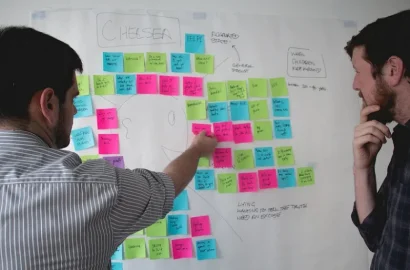
This is where the structure happens. Designers draw rough sketches, usually in black and white.
- No colors yet: They focus on layout. Where does the button go? Is the text big enough?
- Example: Like drawing the floor plan of a house before buying the furniture.
3. Visual Design (The “Look and Feel”)
This is the UI (User Interface) part.
- Adding style: Designers like Steve Schoger or Tobias van Schneider step in here. They pick colors, fonts, and photos that go best with the experience one intends to deliver.
- Making it pop: UI UX Designers always ensure the app looks trustworthy and exciting.
4. Prototyping and Testing (The Reality Check)
UI UX Designers build a fake version of the app that you can click on.
- Testing: They give it to real people. If the user gets confused, the designer goes back to step 1.
- Example: Don Norman would watch a user try to navigate the menu. If the user frowns, the design needs work.
5. Handoff (The Build)
Designers work with coders (and developers) to turn the pictures into a real, working app.
Teamwork: Communication skills (like Julie Zhuo teaches) are critical here to make sure the developers build it exactly right.
Frequently Asked Questions
Q1. How long does it take to become good at UI UX design?
Answer: It usually takes about 3 to 6 months to learn the basics of UI UX Design. However, mastering how UI UX designers work is like learning a sport; it takes years of practice to become a pro.
Q2. Should I focus on UI, UX, or both?
Answer: Start by learning both! Most companies today look for “Product Designers” who understand how things look (UI) and how they work (UX).
Q3. What tools do I need to learn for UI UX design?
Answer: The most important tool right now is Figma. It is free to start and is used by almost everyone. You might also hear about Adobe XD or Sketch, but Figma is the best place to begin.
Q4. How do I get experience if I don’t have a design job yet?
Answer: You don’t need a boss to learn design! Redesign an app you already use, help a friend with a website, or participate in “daily design challenges” online. These projects count as real experience for your portfolio.
Q5. How important is a design degree for UI UX designers’ work?
Answer: It is not strictly necessary. In this field, your UI UX Design portfolio (a collection of your best work) is much more important than a college degree.
Conclusion
The world of design is exciting because it never stands still. By 2026, we will be designing for new devices and solving new problems. But the core secret of how UI UX designers work will remain the same: it’s all about empathy. It’s about caring enough to make things easier for other people.
Each of the 10 designers on this list, from legends like Don Norman to futurists like Gleb Kuznetsov, is inspiring in their own way. Follow them, read their books, watch their videos, and most importantly, start creating your own work.
In 2026, the world of UI UX designers will be more exciting than ever. AI is changing things, user expectations are higher than ever, and competition is fierce everywhere. But, all of this also means that there’s never been more opportunity for designers who genuinely care about making technology more human.
So stop just reading about great designers. Start becoming one! Pick one project this week. Ship it, even if it’s rough and imperfect. Get feedback from real users. Make it better. Repeat this process over and over.
Next Steps
If you’re considering learning more about UI UX design and are looking to launch an exciting new career in the space, check out the UI UX Design Courses offered by AND, which come with a comprehensive AI-inclusive curriculum covering hands-on learning opportunities, unparalleled mentorship, and dedicated placement support.
You can also check out this project by AND Learner, Yash Ramdas, to see how your classes can shape your skillset.
To learn more about UI UX design, head over to the AND Academy blog. As a starting point, you can consider going through the following resources:
- All About Responsive Design: Principles, Best Practices, and Its Correlation to UI UX
- Do You Need a Design Background to Become a Professional UI UX Designer?
- Top 13 UX Design Bootcamps To Consider (and How To Choose One)
In case you think you need further assistance, here are some of our resources you can consider:
- Watch this session by Shiva Viswanathan, Design Head of Ogilvy Pennywise, and Naman Singh, Product Experience Designer at RED.
- Talk to a course advisor to discuss how you can transform your career with one of our courses.
- Pursue our UI UX Design courses – all courses are taught through live, interactive classes by industry experts, and some even offer a Job Guarantee.
- Take advantage of our scholarship and funding options to overcome any financial hurdle on the path of your career transformation.
Note: All information and/or data from external sources is believed to be accurate as of the date of publication.