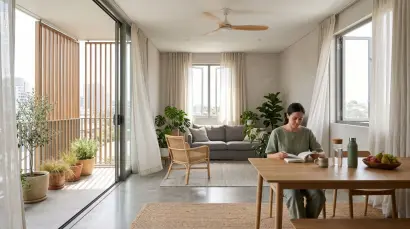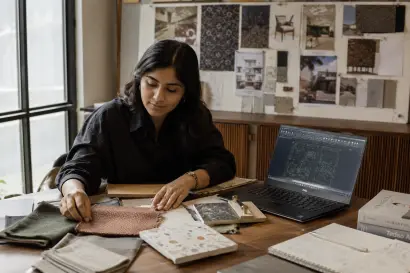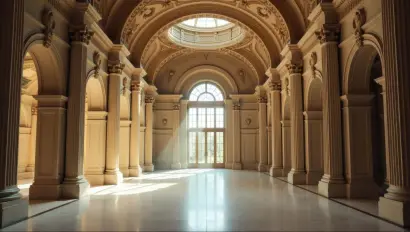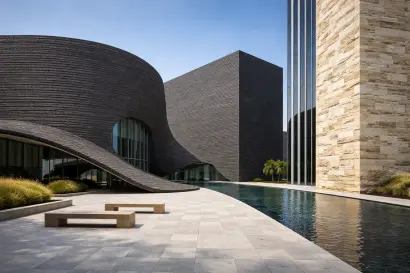






Explore 26 of the most popular interior design styles, from Minimalist to Maximalist, and compare the key features, mood, and design direction of each one.
SUMMARISE WITH:


In 2026, interior design continues to evolve, blending contemporary trends with timeless influences to suit modern lifestyles. In interior design, different styles help designers and their clients describe and discuss the particular looks or approaches they’d like to adopt in their homes or projects. These styles may evoke different eras, cultures, or places, or simply be a description of a certain color palette, atmosphere, or overall finish.
By learning about different interior design styles, you’ll be able to express your own preferences and personality in the way your home is styled. This foundational knowledge will also give you the confidence to experiment with your interiors, mix different styles together, or even break the rules completely to create even more unique looks.
Many interior designers borrow from more than one style, but understanding the core traits of each one will help you work with them more efficiently. Where relevant, we’ve added references to projects by AND Academy students to show how these style cues translate into actual design decisions.
Here’s a video to help you better understand the different top interior design styles.
Quick answer: interior design styles are recognised aesthetic languages, each with its own colours, materials, textures and mood. The most popular include modern, minimalist, Scandinavian, industrial, bohemian, contemporary and art deco. This guide breaks down 26 styles with real designer examples and how to use each, including which styles suit Indian homes.
Here is what we have covered in this blog:
- Mid Century Modern
- Minimalist
- Scandinavian
- Shabby Chic
- Bohemian
- Coastal
- Art Deco
- Modern Farmhouse
- Neo Industrial
- Maximalist
- Memphis
- Regency
- Contemporary
- Art Moderne
- Eclectic
- Farmhouse
- French Country
- Hollywood Glam
- Japandi
- Mediterranean
- Asian Décor
- Rustic
- Traditional
- Transitional
- Feng Shui
- Urban Modern
1. Mid-Century Modern
The interior design style known as Mid-Century Modern first came to prominence after World War Two, bridging the decades between 1940 and 1970. The style is defined by an emphasis on vibrant colors in wall art, paint palettes, and textiles, while furniture in this style is frequently made of natural materials. Due to resources at the time, minimalism and functionalism became central considerations of the design movement, while clean silhouettes, indoor plants, and warm wood fittings provide a distinctly Danish feel.
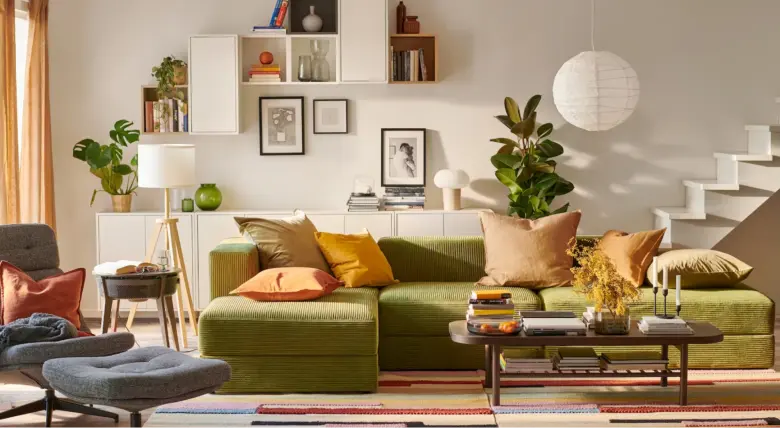
An example of a Mid Century Modern-style living room
When to use it
- When you want a room to feel retro, functional, and visually warm without feeling heavy.
- When clean silhouettes, open layouts, and statement furniture matter more than ornate detailing.
How to use it
- Use tapered-leg furniture, warm woods, geometric forms, and a restrained mix of vintage-inspired colours.
- Keep the layout open and let a few sculptural pieces, plants, and lighting do the visual work.
Real-world example: Mid-century modern was defined by 1945-1970 designers Charles and Ray Eames, whose molded-plywood Eames Lounge Chair (1956) remains its signature piece, alongside George Nelson and Florence Knoll. See our full guide to Mid Century Modern interior design.
2. Minimalist
The central idea behind Minimalism is “less is more”, with minimalist designers promoting the reduction of clutter and the simplification of interiors in order to promote the richness that can be found in emptiness. With elements taken from Japanese Zen Philosophy, minimalist interior designers seek to create calm, pure, and harmonious spaces. This is achieved through the use of features such as white walls, neutral color palettes, natural flooring, and the reduction of visual distractions.
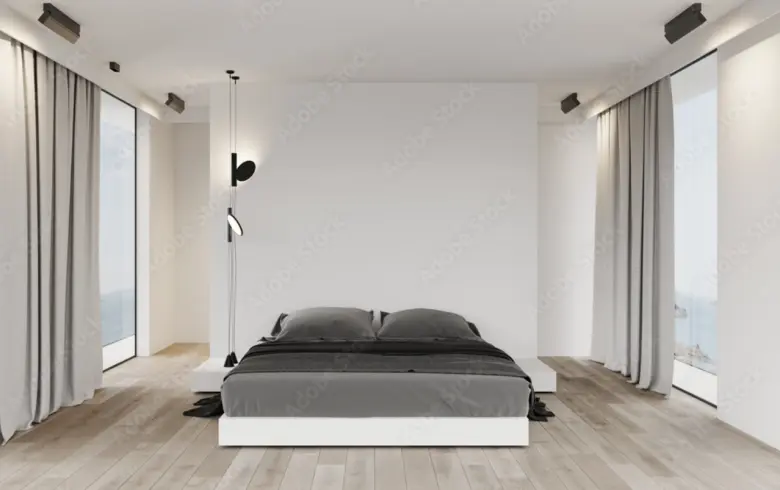
An example of a Minimalist-style bedroom.
When to use it
- When you want the room to feel calm, quiet, and visually uncluttered.
- When a smaller space needs clearer zoning, more breathing room, and less visual noise.
How to use it
- Reduce finishes, colours, and decorative objects before adding anything new.
- Rely on storage, clean lines, natural materials, and lighting to create depth.
One of AND Academy's students, Aditi Sharma, used a Minimal and Modern-Minimal direction in a residential project for the Teniya family to shape a calmer, more visually controlled bedroom concept.
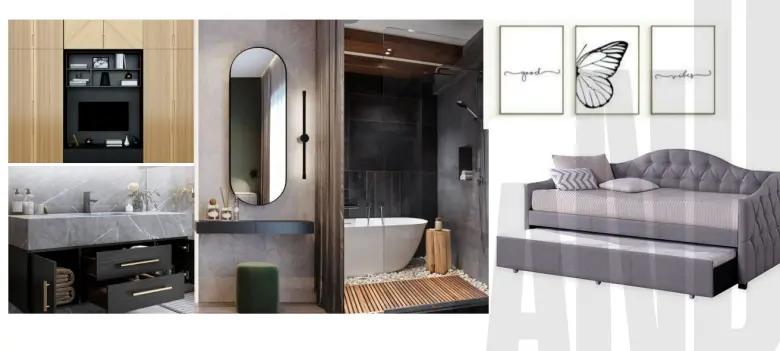
What Aditi did
- She used minimalist cues to guide the room toward a cleaner and more intentional visual language.
- She treated the style as a planning device, not just a decorative choice.
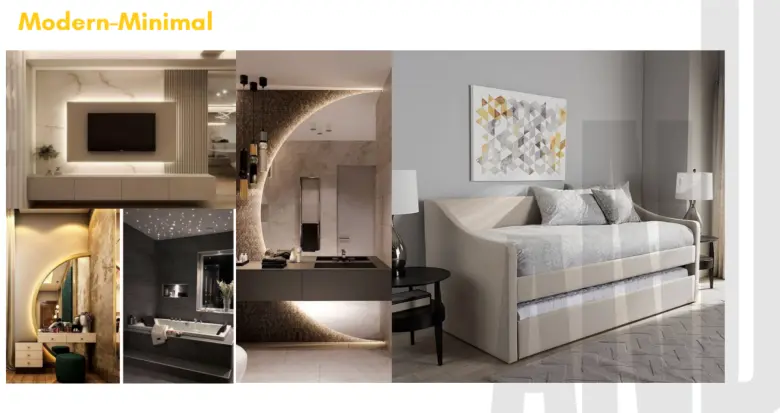
How She did it
- She began with mood boards early in the process and used them to narrow the design direction before finalising layout and materials.
- She aligned storage, lighting, finishes, and furniture decisions to a restrained palette and cleaner lines rather than adding unnecessary visual noise.
You can also check out Aditi’s complete project work through this link.
Also, to learn more, here is a complete guide to minimalist interior design:
A Comprehensive Guide To Minimalist Interior Design
Real-world example: Mumbai designer Ashiesh Shah (Atelier Ashiesh Shah) is known for a minimalist, Wabi-Sabi approach that pairs restrained neutral palettes with handcrafted Indian pieces, showing how minimalism can still feel warm rather than stark.
3. Scandinavian
The Scandinavian style of interior design represents a mixture of styles hailing from Norway, Sweden, Denmark, Finland, and Iceland and encapsulates simplicity, functionality, and a minimalist aesthetic. The style differs from Minimalism in that it creates a warm, relaxed, and inviting feeling through the use of natural light and neutral colors, while bare arrangements and clean detailing show the prioritization of affordability over basic necessity. Frequently seen in Scandinavian-style interiors are the use of tonal textural pieces, the use of natural wood for furniture and accessories, and more industrial pieces for lights and shelving.
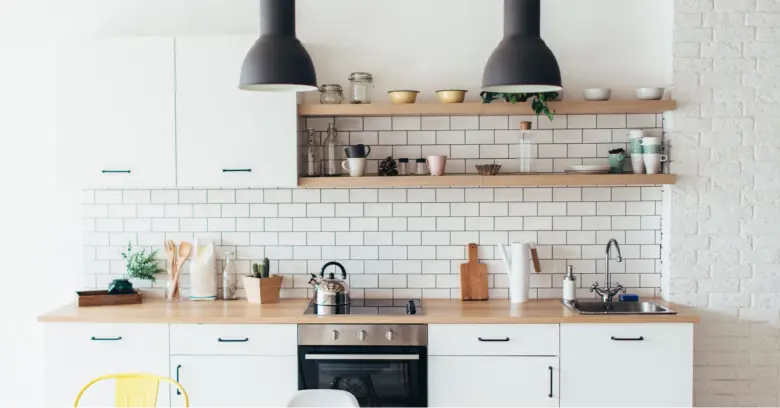
An example of a Scandinavian-style kitchen.
When to use it
- When you like minimalist spaces but still want warmth, softness, and everyday comfort.
- When the goal is a bright, functional room that feels relaxed rather than stark.
How to use it
- Combine light woods, neutral colours, and simple furniture with layered textures and soft textiles.
- Maximise natural light and keep accessories practical, tactile, and easy to live with.
Real-world example: Scandinavian design was shaped by Nordic pioneers such as Alvar Aalto and Arne Jacobsen, whose light woods, soft curves and functional forms (like Jacobsen’s Egg chair) still define its warm minimalism. See our full guide to Scandinavian Interior Design
4. Shabby Chic
With a history in vintage French design, Shabby Chic speaks to a lived-in yet elegant look that incorporates country farmhouse and antique elements. Features of a shabby chic interior could include ornate gilded mirrors, white-painted floorboards, natural fabrics, distressed wooden furniture or fittings, and soft or pastel color palettes. Though accessories or furniture may appear worn or used, the overall effect of the style is timeless and romantic.
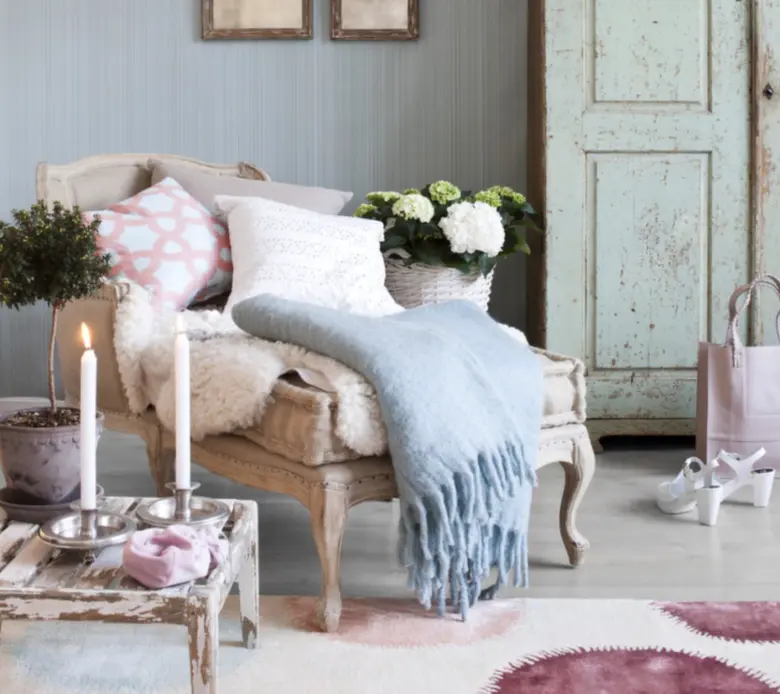
An example of a Shabby Chic-style interior.
When to use it
- When you want a space to feel romantic, vintage-inspired, and gently lived-in.
- When bedrooms, reading corners, or guest spaces need softness more than sharp modernity.
How to use it
- Use distressed wood, white-painted finishes, soft florals or pastels, and antique-style accents.
- Balance decorative pieces with light fabrics and enough open space so the room does not feel fussy.
5. Bohemian
Bohemian (also known as “Boho”) is an interior design style that marries multiple aesthetics and cultural influences to create a laid-back and miscellaneous look. Taking elements from nature and combining contrasting patterns and colors, Bohemian interiors take a maximalist approach to accessories and decoration, with fans of the style trawling vintage markets and artisan stores to find unique pieces to decorate their homes with.
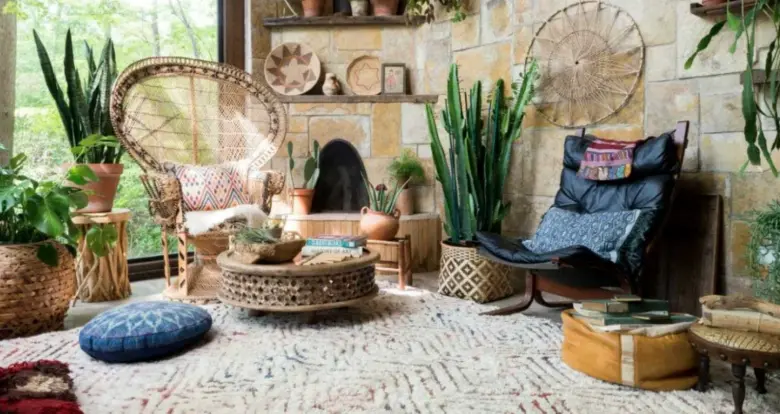
An example of a Bohemian-style interior.
When to use it
- When you want a relaxed, expressive space built around personality and collected objects.
- When creative rooms can handle layered colour, pattern, and texture without needing a formal look.
How to use it
- Layer rugs, cushions, throws, plants, and handmade pieces instead of matching every item.
- Use a loose colour story so the room still feels intentional even with contrasting patterns.
Real-world example: Bohemian style has no single founder; it grew from 19th-century artistic and travelling communities, which is why authentic boho rooms layer collected, well-travelled pieces rather than a matched set. See our full guide to bohemian interior design.
6. Coastal
Taking inspiration from the sea, beach, and natural landscape of the coast, Coastal interiors use vibrant neutrals, natural light, and found objects to mirror the impression of space, illumination, and calm associated with seaside living. Color palettes frequently include light blues, creams and neutrals, while furniture is also kept light, with whitewashed furniture and floorboards creating the illusion of more light and space. Shells, stones, driftwood, and glass are popular centerpieces in Coastal homes, with crisp white textiles further bolstering the feeling of freshness in the room.
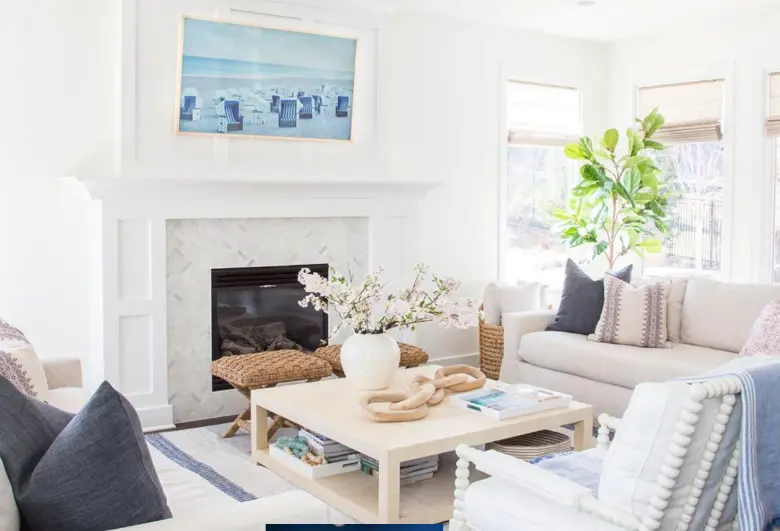
An example of a Coastal-style interior.
When to use it
- When you want a room to feel airy, bright, and connected to the outdoors.
- When a smaller or darker space needs to feel fresher and visually lighter.
How to use it
- Start with whites, sands, soft blues, and light woods to create a calm base.
- Add texture through linen, cane, glass, driftwood, and a few restrained seaside references.
7. Art Deco
With its roots in 1920s France, Art Deco–short for the French Arts Décoratifs– is a visual arts, architecture, and product design style that has been adopted by interior designers seeking to represent the glamor of the period in homes and interiors. Mirroring the luxury and decadence that defined the era, Art Deco evokes opulence through the use of rich textiles, bold colors, jewels, and ornate decoration, while furniture and statement centerpieces come in geometric forms and are made from luxury materials such as marble, mirrored glass, and lacquer.
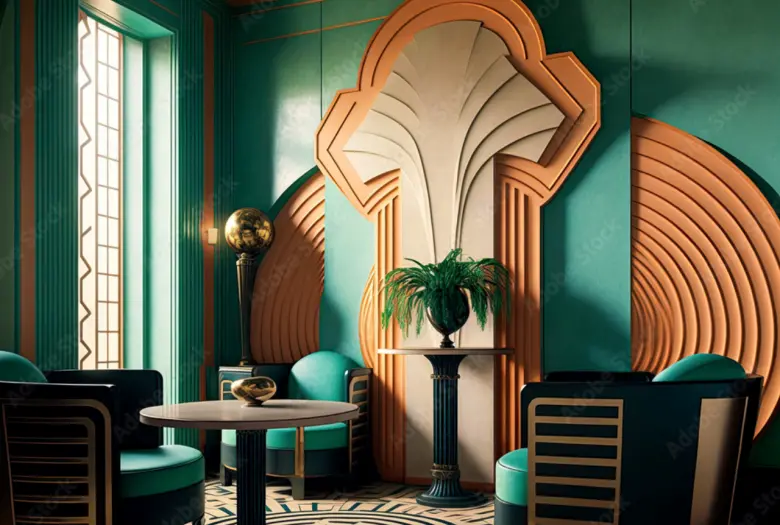
An example of an Art Deco-style interior.
When to use it
- When you want a space to feel glamorous, dramatic, and highly styled.
- When entertaining areas can support bolder geometry, richer colours, and luxe materials.
How to use it
- Use mirrored surfaces, marble, lacquer, brass, velvet, and strong geometric patterns.
- Keep the composition structured so the richness feels polished rather than excessive.
Read more about Art Deco and how to use it in interior design here:
All You Need to Know About Art Deco Interior Design Style (With Ideas and Trends)
Real-world example: Art Deco emerged from 1920s-30s Jazz Age glamour, with bold geometry, brass and lacquer; New York’s Chrysler Building interiors are its most iconic showcase.
8. Modern Farmhouse
Modern Farmhouse is an interior design style that offers a modern twist on its more rustic cousin. It does this through the use of a less cluttered, more minimal approach combined with a pared-back and neutral color palette. Mid-century furniture and industrial elements can be incorporated to give a more contemporary feel. Exposed wood beams, vintage accent pieces, and house plants complete this modern makeover of the traditional farmhouse look.
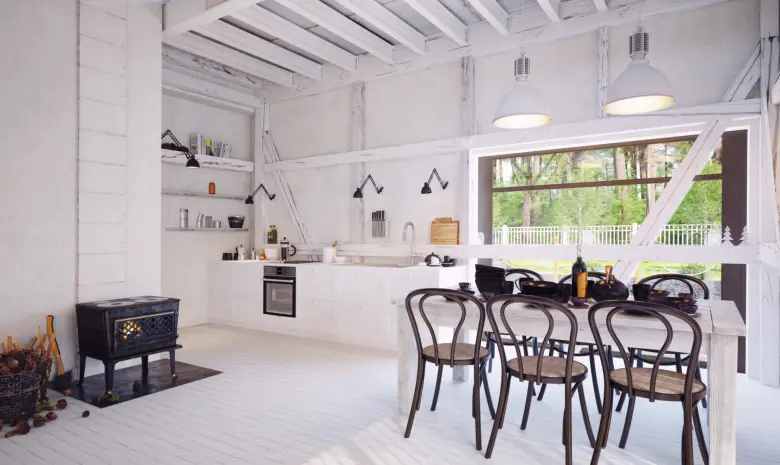
An example of a Modern Farmhouse-style interior.
When to use it
- When you want farmhouse warmth without the heavier, more cluttered rustic look.
- When family spaces need to feel comfortable, current, and easy to maintain.
How to use it
- Pair neutral palettes and simple forms with exposed wood, vintage accents, and black metal details.
- Mix cosy textures with cleaner furniture lines so the room feels fresh rather than themed.
9. Neo Industrial
Interiors designed in a Neo Industrial style offer a fresh take on increasingly popular factory-inspired interiors. The look champions the aesthetic pleasure of raw and unprocessed materials while celebrating the marriage of form and function to create beautiful yet liveable interiors. Elements that you might expect to see in a Neo-Industrial style interior include exposed brickwork, concrete, steel, and wood, with the imperfections and natural textures of these materials highlighted throughout the space.
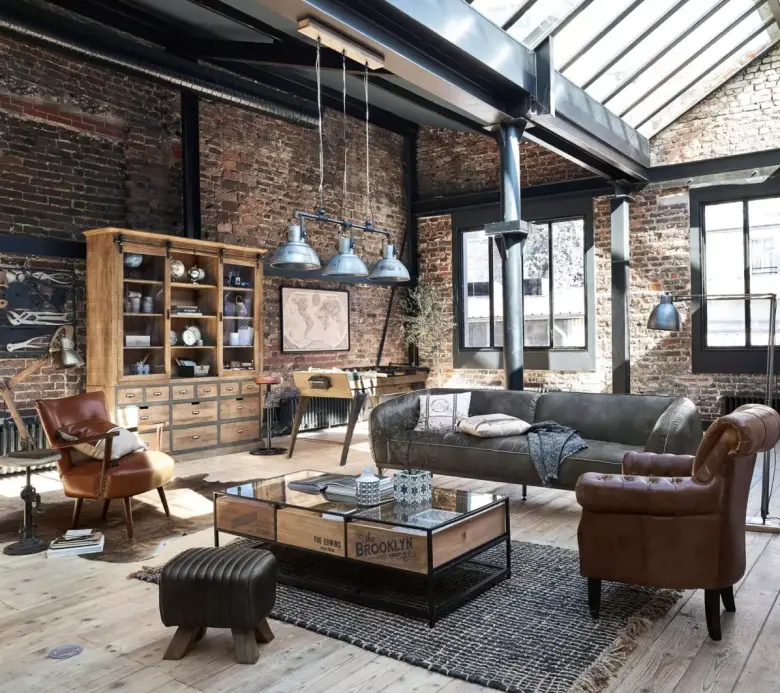
An example of a Neo Industrial-style interior.
When to use it
- When the space already has architectural character such as brick, concrete, or large windows.
- When you want an urban look that feels raw and functional but still liveable.
How to use it
- Highlight structural materials like steel, concrete, wood, and exposed brick instead of hiding them.
- Soften the harder surfaces with warm lighting, rugs, upholstered seating, and natural wood.
Real-world example: Indian designer Sussanne Khan is known for an industrial-chic aesthetic paired with quiet luxury, a useful reference for softening raw industrial materials for a home rather than a loft. See our full guide to industrial interior design.
10. Maximalist
Maximalist interior design rejoices in a “more is more” philosophy. Embracing layers of bright colors, clashing patterns, contrasting textures, and eclectic collections of artwork, the aim of maximalist is to showcase the personality of the homeowner in a carefully curated, and sometimes chaotic, display. Due to the value placed on the individual tastes of the homeowner, each Maximalist style interior will be unique to the person designing it. A good rule of thumb is to aim for bright prints, and lots of contrast, and to place your unique finds and treasured positions at the center of each room.
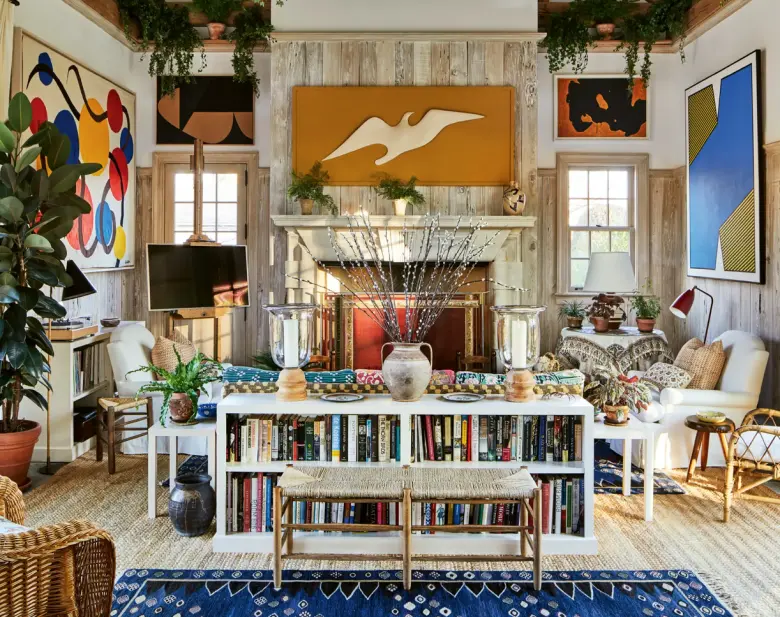
An example of a Maximalist-style interior.
When to use it
- When you want the room to reflect a strong personal point of view and layered interests.
- When living rooms, studios, or bedrooms can carry more visual energy and display.
How to use it
- Build around a clear palette or theme before layering art, books, textiles, and collected objects.
- Repeat colours, shapes, or motifs so the abundance feels curated rather than random.
Real-world example: Raseel Gujral Ansal’s studio Casa Paradox (founded 1993) built its name on “Indigenous Luxury”, layering bold colour, pattern and Indian craft, a maximalist approach rooted in cultural storytelling.
11. Memphis
A playful take on postmodernism, graphic patterns, bold color palettes, and square tiles feature heavily in Memphis-style interior design. Coming to the fore in the 1980s, the style encourages the use of geometric shapes and mismatching decor. Items that are generally associated with the look include the iconic Ultrafragola mirror or the Carlton bookcase. More modern takes on the Memphis aesthetic champion the incorporation of arches, curves, shapes, neon, and color into the room, while extravagant house plants feature heavily both in new and older versions of the trend.
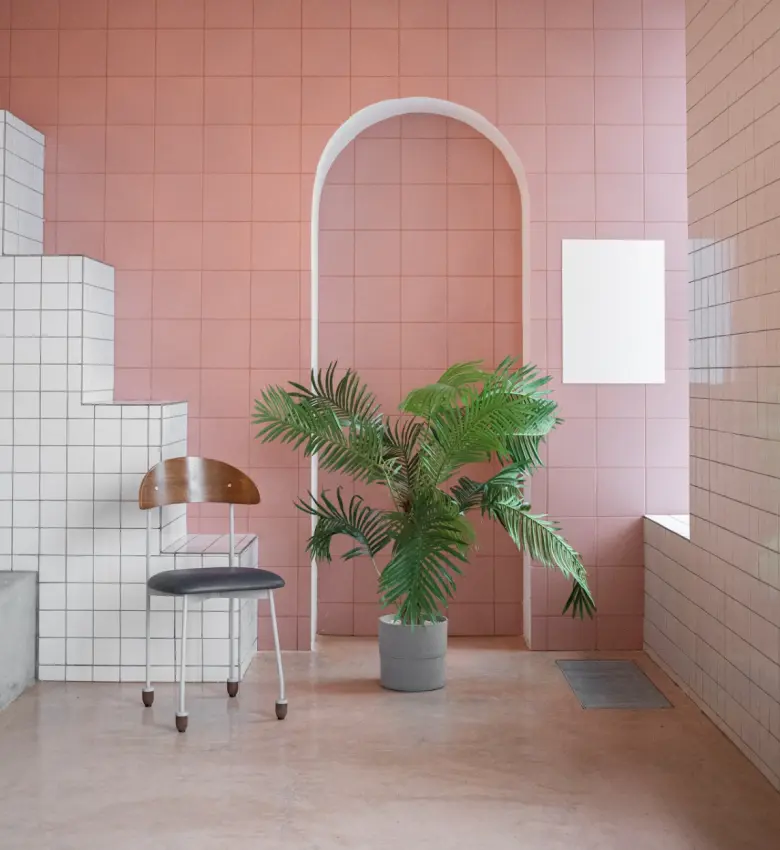
An example of a Memphis-style interior.
When to use it
• When you want a playful statement space that feels bold, graphic, and deliberately unconventional.
• When accent-led rooms can handle high contrast, colour, and shape without needing timeless restraint.
How to use it
• Use geometric forms, bold colour blocking, arches, squiggles, and standout furniture pieces selectively.
• Anchor the look with a simpler backdrop so the statement elements stay readable.
Real-world example: Memphis was founded in 1981 in Milan by Italian designer Ettore Sottsass and a young collective; its clashing colours and geometric shapes were a deliberate rebellion against 1970s minimalism.
12. Regency
Regency style speaks to opulence and grandeur with touches of the exotic thrown in as a nod to overseas adventures. Animal masks used as decor elicit a flamboyant feel, while key pieces include heavy drapes, high-backed chairs, chandeliers, and gilded mirrors. Materials favored by this style include dark, heavy woods such as mahogany or rosewood, and brass inlays, while chair legs are typically designed to be column-, concave-, or X-shaped.
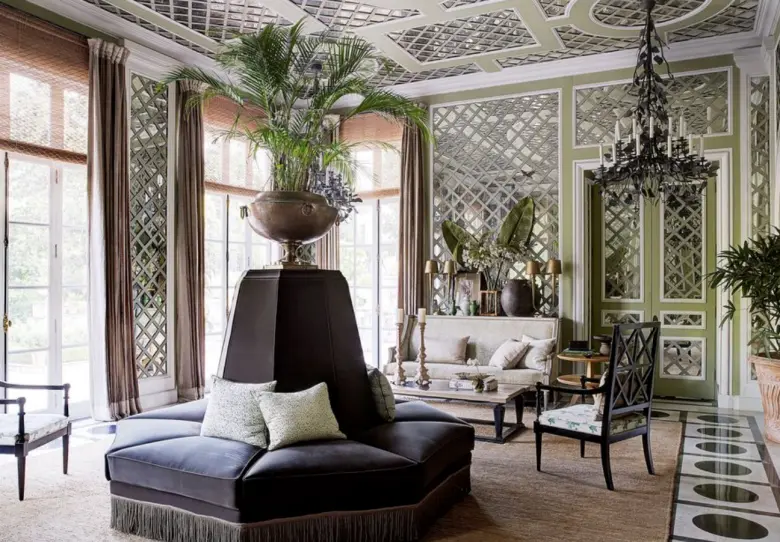
An example of a Regency-style interior.
When to use it
• When you want a formal interior with grandeur, drama, and historic character.
• When dining rooms, entryways, or sitting rooms need a more opulent visual language.
How to use it
• Use chandeliers, drapery, gilded mirrors, dark woods, brass, and sculptural furniture legs.
• Keep layouts symmetrical and let a few ornate focal points carry the room.
13. Contemporary
The Contemporary interior design style refers to what is in fashion right now–a unique blend of subtlety and sophistication. Contemporary interiors generally include minimal elements combined with high-tech details, with room layouts that are more streamlined than typically modern interiors. Designers who favor this style tend to focus on craftsmanship, textiles, and a color palette comprising black, white, and neutral tones, while the goal of the design is to make the most of each individual environment and optimize functionality.
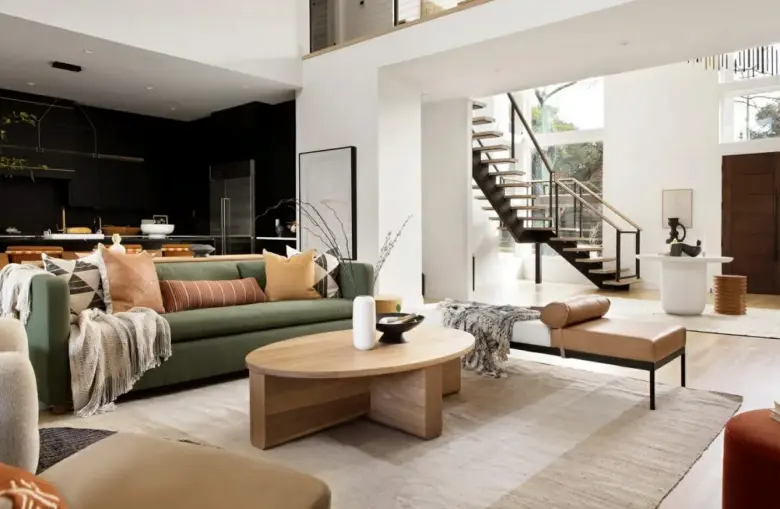
An example of a Contemporary-style interior.
When to use it
• When you want a room to feel current, efficient, and visually edited.
• When urban homes need a practical style that still feels refined and design-aware.
How to use it
• Use streamlined furniture, controlled colour choices, and storage that keeps surfaces clearer.
• Add contrast through texture, craftsmanship, and lighting instead of heavy ornamentation.
One of AND Academy's students, Akanksha Ghosh, used contemporary cues in a residential project to create a warm, modern, and clutter-controlled interior direction.
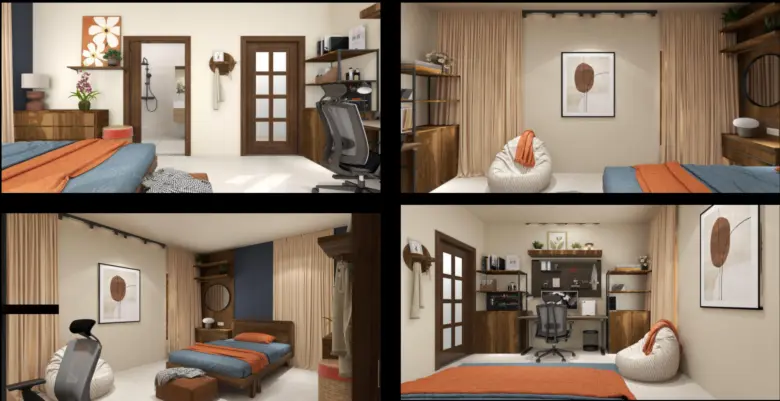
What She did
- She used contemporary style to make the room feel current, functional, and visually lighter.
- She treated style as a way to improve daily use, not just visual appeal.
How they did it
- She translated the brief into streamlined planning, efficient storage, and a more edited material and furniture direction.
- She balanced modern visual clarity with practical decisions that supported everyday routines.
Here is a link to Akanksha project work.
Real-world example: Gauri Khan (Gauri Khan Designs, launched 2013) is known for contemporary, understated-glamour interiors for Indian celebrities that fuse global sensibilities with Indian craftsmanship. See our full guide to contemporary interior design.
14. Art Moderne
Art Moderne, also known as American Modern or Modernist, is all about bold design. Hailing from the US in the 1930s, striking patterns, clear lines, bright colors, and simple, geometric shapes dominate homes decorated in this style. Designers with a preference for Art Moderne produce an aesthetic that is less cluttered and more functionality-oriented than the Art Deco interior design style; the Art Moderne movement is generally considered to be a more contemporary take on traditional interior design principles.
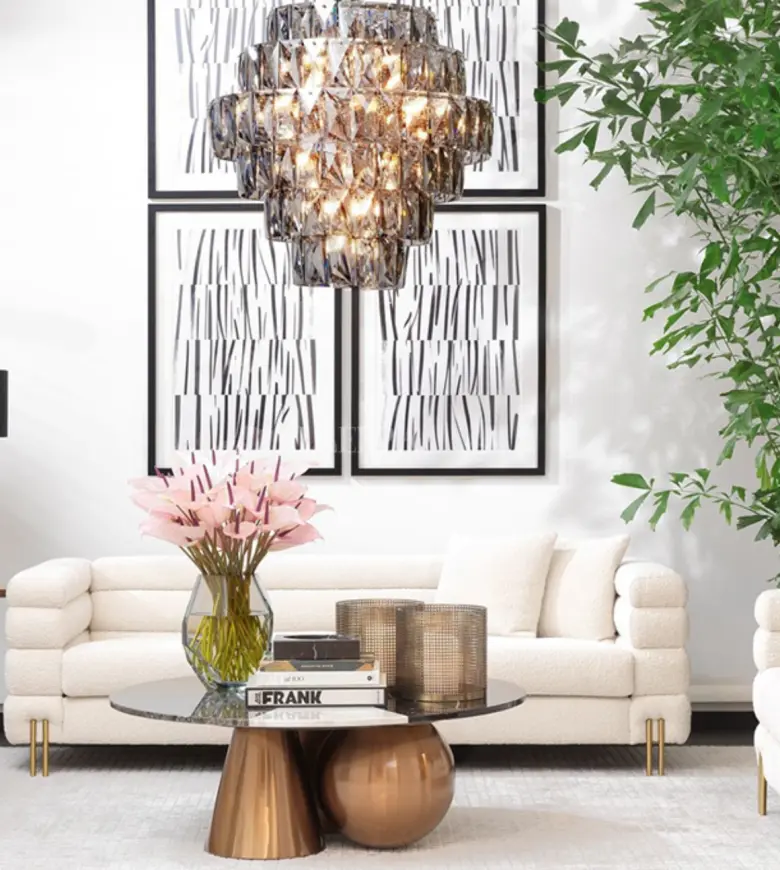
An example of an Art Moderne-style interior.
When to use it
• When you want vintage character with a cleaner, more streamlined feel than Art Deco.
• When you want bold shapes and visual drama without an overly ornate room.
How to use it
• Use curved forms, horizontal lines, glossy finishes, geometric shapes, and bold accent colours.
• Keep furniture shapes simple and let silhouette and contrast create the impact.
15. Eclectic
Homes which seek to champion the Eclectic interior design style typically incorporate elements from a range of different design approaches into one setting. Drawing inspiration from both contemporary and traditional interiors, the aesthetic brings together a mixture of furniture and accessory styles while wallpaper and textile choices which exhibit clashing colors and mismatched patterns are actively encouraged.
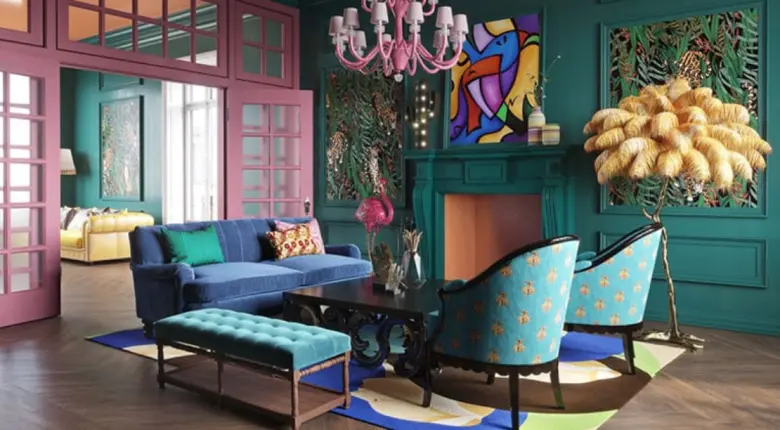
An example of an Eclectic-style interior.
When to use it
• When you already own varied pieces and want to combine them intentionally rather than start over.
• When the space should feel collected, individual, and less tied to one rigid design rule.
How to use it
• Use one unifying thread such as colour, scale, or material to connect unlike pieces.
• Mix old and new carefully, and leave enough visual pause between strong statement objects.
Real-world example: Eclectic interiors work when varied pieces share a thread (a colour, era or material). See our full guide to eclectic interior design.
16. Farmhouse
Interiors designed with the Farmhouse style in mind are defined by the use of wood elements in furniture, floorboards, and accessories, while white and cream tones for walls and textiles give a room a fresh, outdoorsy feel. The most recognisable element of the Farmhouse style of interior is the incorporation of distressed furniture. This is furniture that has been painted and then purposefully sanded down to give a more lived-in look. In general, Farmhouse-style interiors prioritize practicality and comfort over striking design choices, while soft, light furnishings and neutral-colored rugs are also popular additions to a Farmhouse-style room.
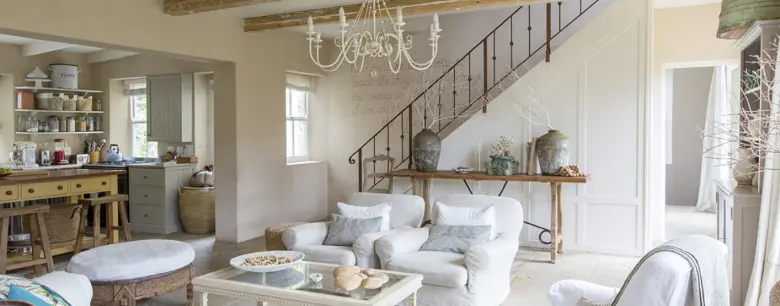
An example of a Farmhouse-style interior.
When to use it
• When you want an interior to feel practical, familiar, and comfortable for daily family use.
• When natural textures and a lived-in look matter more than polished formality.
How to use it
• Use distressed wood, white or cream walls, neutral textiles, and sturdy furniture.
• Layer rugs, simple storage, and soft lighting to keep the room warm and functional.
17. French Country
French Country is an interior design style inspired by the homes of the French countryside that is recognisable by the combination of comfortable and elegant pieces such as rustic antiques and upholstered chairs. Simple yet graceful wooden décor or objects, such as chests, side tables, and mantelpieces are popular choices when adopting this style, with cozy, vintage rugs and cushions used to increase comfort and soften silhouettes.
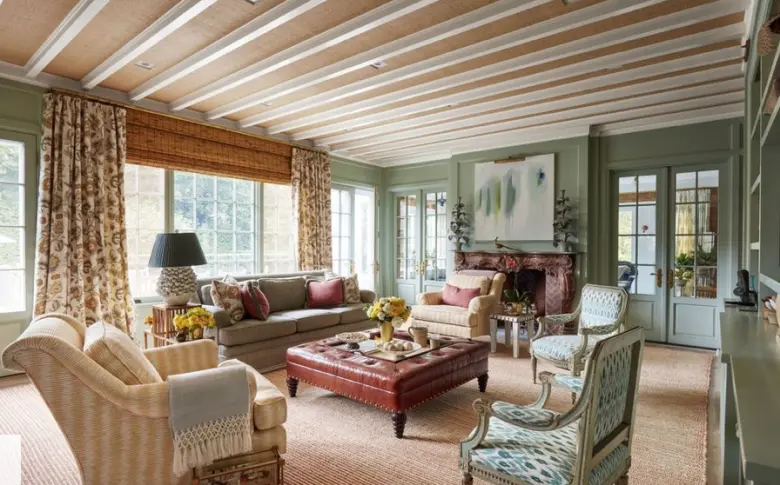
An example of a French Country-style interior.
When to use it
• When you want elegance and comfort in the same room rather than one or the other.
• When dining rooms and bedrooms need a softer traditional look with rustic charm.
How to use it
• Pair rustic wood pieces with upholstered seating, vintage-style rugs, and muted floral or patterned fabrics.
• Keep the palette warm and relaxed so the room feels graceful instead of overly formal.
18. Hollywood Glam
Combining elements of Art Deco and Mid Century Modern, Hollywood Glam is the ideal choice for those pining for more glamor in their daily lives. This decor choice brings together rich fabrics such as velvet, silk, and satin, lacquered finishes, fresh color palettes, mirrored surfaces, and even crystal accents, paying homage to the Golden Age of Hollywood. Other defining characteristics might include plush duvet covers, upholstered headboards, and bold, timeless patterns.
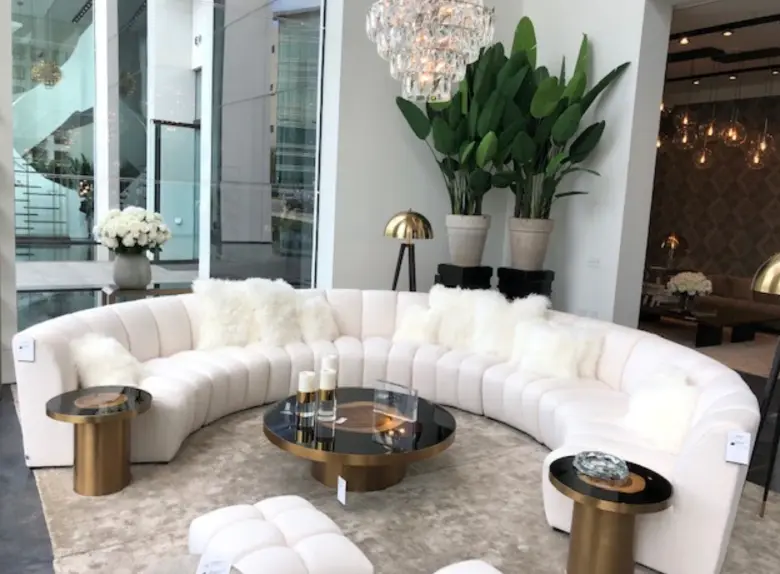
An example of a Hollywood Glam-style interior.
When to use it
• When you want a polished, luxurious room with a strong decorative presence.
• When bedrooms or lounges can support richer materials, shine, and a more dramatic mood.
How to use it
• Use velvet, satin, mirrored surfaces, lacquered finishes, and metallic accents.
• Add statement lighting and plush upholstery, but keep the palette controlled so the glamour stays sharp.
19. Japandi
Dominated by calming, neutral tones such as beiges, grays, taupes, and creams, Japandi fuses Japanese and Scandinavian minimalist interior design styles to create serene, balanced, and harmonious spaces. Natural elements, such as woods and clays, are popular choices for Japandi accent pieces like vases, mugs, or pots, while black accents are sometimes used to create contrast. Clean lines and a focus on simplicity make Japandi an ideal choice for those with busy lives looking for a tranquil space to come home to.
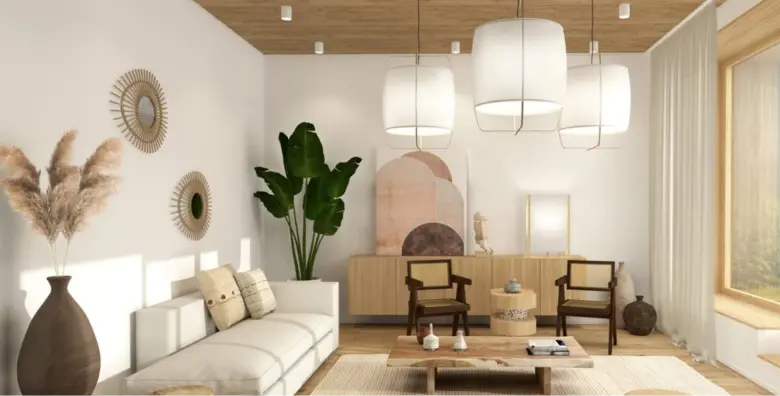
An example of a Japandi-style interior.
When to use it
• When you want a quiet, balanced home that feels warm without feeling busy.
• When the goal is a stress-reducing space built around simplicity, texture, and routine.
How to use it
• Combine low-clutter layouts with muted neutrals, natural woods, clay, linen, and matte finishes.
• Use fewer objects overall, and choose pieces that feel both functional and tactile.
20. Mediterranean
Mediterranean-style interior design channels the aesthetics rooted in coastal Mediterranean living, most notably the interior design choices associated with Southern European countries such as Spain, Greece, and Italy. Natural finishes, large views of the outdoors, exposed beams, and a neutral or white color palette are common in these parts of the world, as is a focus on indoor-outdoor living. Allowing the maximum amount of light to enter the room is typical for Mediterranean homes, combined with the intent to create large communal spaces for gatherings of family and friends.
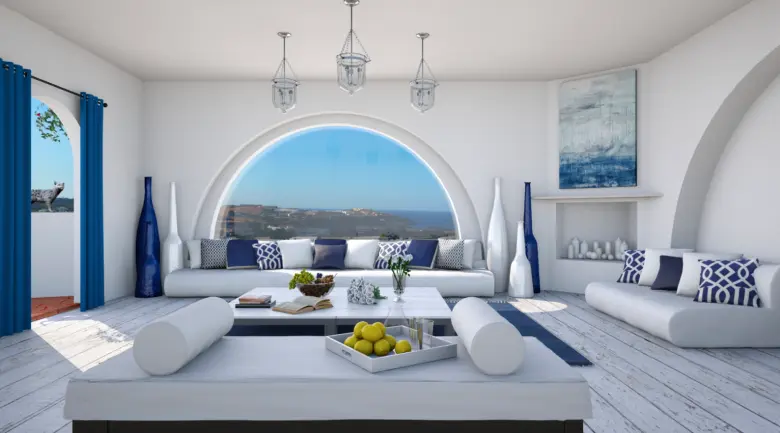
An example of a Mediterranean-style interior.
When to use it
• When you want a light-filled, sociable space that feels open to the outdoors.
• When large communal areas need warmth, ease, and strong indoor-outdoor flow.
How to use it
• Use white walls, natural stone, terracotta, wood beams, and earthy or sea-washed tones.
• Prioritise light, airflow, and generous furniture placement instead of crowding the room.
Real-world example: Copenhagen studio Norm Architects, whose pine-clad Archipelago House blends Swedish and Japanese sensibilities, is a widely cited reference for authentic Japandi.
21. Asian Décor
Sometimes referred to as Oriental interior design, Asian Décor brings together design concepts from countries such as China, Thailand, Japan, and Malaysia. While Asian Décor will vary depending on which country the interior designer is channeling, the creation of tranquil spaces is a common theme to all interiors that come under this banner. An earth-tone color palette, the incorporation of natural materials into the space, and floral and nature-inspired motifs are also popular elements found in Asian Décor.
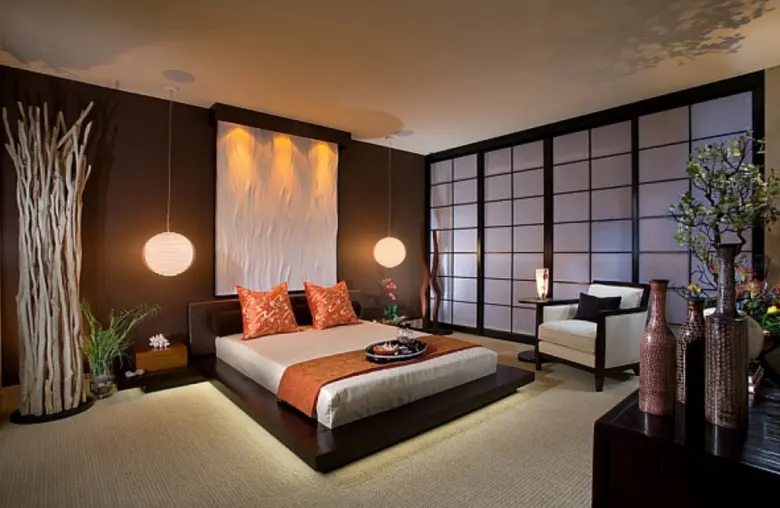
An example of an Asian Décor-style interior.
When to use it
• When you want a room to feel calm, balanced, and connected to nature.
• When bedrooms, meditation corners, or living spaces need a quieter visual rhythm.
How to use it
• Use natural materials, earth tones, floral or nature-led motifs, and intentional furniture placement.
• Keep surfaces clearer and allow symmetry, proportion, and negative space to shape the room.
22. Rustic
Rustic interior design is a broad term used to incorporate a range of interior design styles, such as Coastal, Farmhouse, and Tuscan, to name a few. Rugged, natural beauty is valued in Rustic homes, with exposed wood or brick and stone centerpieces commonly seen. Those hoping to create a Rustic interior in their own home should seek to incorporate features that highlight and emphasize the structure of the building while using light and glass to draw connections between outdoors and indoors.
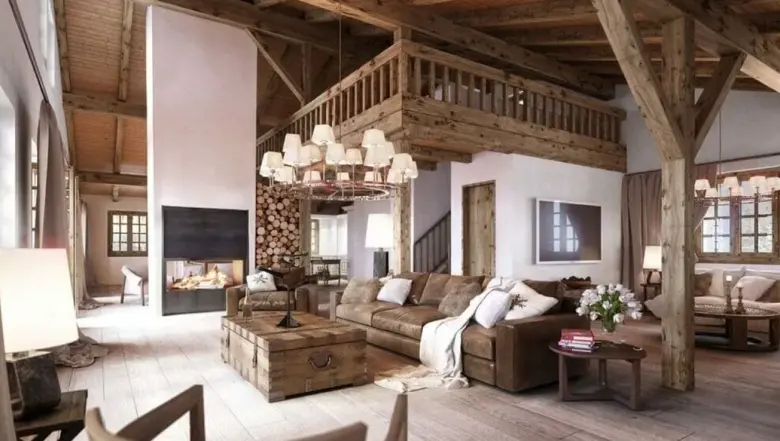
An example of a Rustic-style interior.
When to use it
• When you want the natural structure and materiality of the home to stay visible.
• When the room should feel grounded, durable, and closely tied to the outdoors.
How to use it
• Highlight stone, brick, reclaimed wood, and other raw textures instead of covering them up.
• Use sturdy furniture, warm lighting, and natural fabrics to soften the rougher finishes.
Here is a complete guide to Rustic Interior Design
The Ultimate Guide to Rustic Home Interior Design (With Trends for 2026)
Real-world example: Rustic interiors lean on raw, natural materials (aged wood, stone, wrought iron); pair them with warm lighting to avoid feeling cold.
23. Traditional
The Traditional style of home décor has its roots in 18th and 19th century Europe and is based on conventional ideas from that time of how a room should look. Despite hailing from a specific time period, Traditional interiors seek to exhibit a timeless elegance that combines warm tones and cozy fabrics with classic choices of furniture and furnishings. Rooms are typically designed to be functional and family-friendly, with familiar, comfortable pieces prioritized over what’s currently in fashion. Dark wood finishes and neutral color palettes are also popular choices in Traditional interior design.
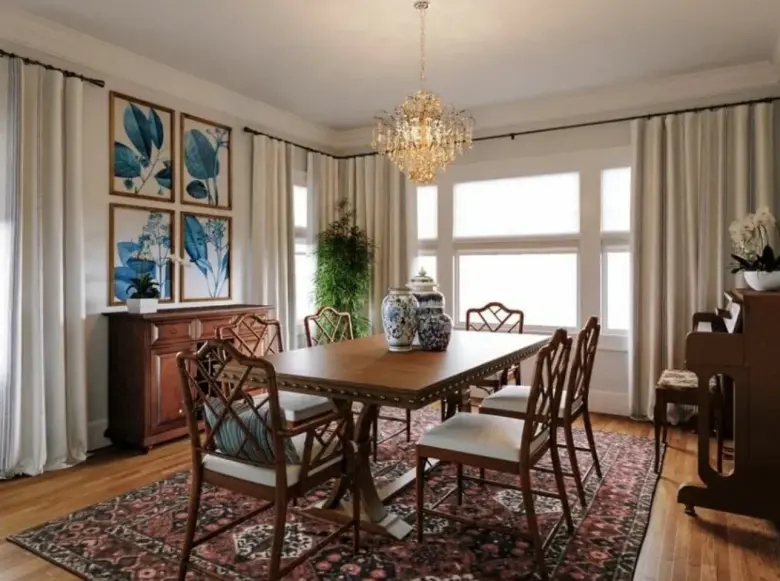
An example of a Traditional-style interior.
When to use it
• When you want a timeless, familiar interior that prioritises comfort over novelty.
• When family homes need warmth, structure, and a sense of lasting style.
How to use it
• Start with classic furniture lines, warm woods, layered textiles, and soft, balanced lighting.
• Keep the palette warm and grounded so the room feels welcoming rather than stiff.
One of AND Academy's students, Nandini Nagarajan, used similar cues in a residential project to create a softer traditional direction that still felt grounded and timeless.
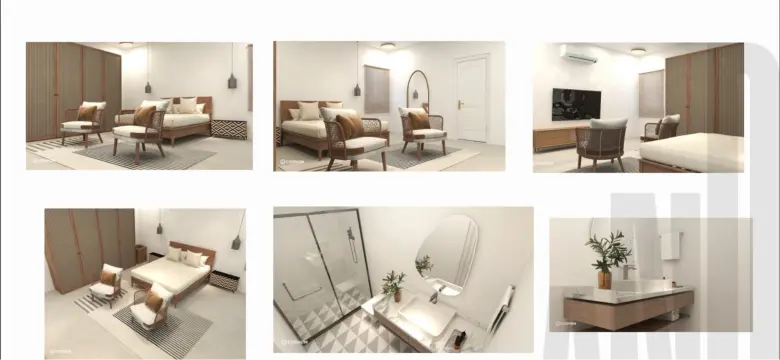
What She did
- She used traditional cues to bring familiarity and warmth into the space without making it feel heavy.
- She showed that traditional style can be interpreted in a more restrained and contemporary way.
How She did it
- She relied on warm neutral colours, wood finishes, layered lighting, and familiar furniture language instead of decorative excess.
- She translated traditional character through materials and atmosphere, not just ornament.
Here is the link to complete project work from Nadini Nagarjan
24. Transitional
A merging together of two distinct interior design styles–Traditional and Minimalist–the Transitional interior design style first began to appear in homes around the middle of the 20th century as a softer alternative to embellished Traditional homes and stark Minimalist designs. While Transitional design can be loosely interpreted, elements that frequently occur include neutral color palettes, pops of colors in accessories, textiles, or artwork, statement lighting, and furniture that combines both curved and straight lines.
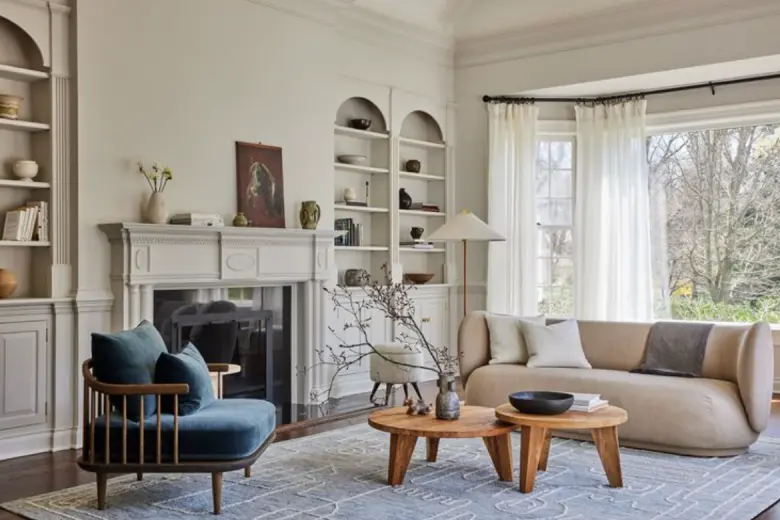
An example of a Transitional-style interior.
When to use it
• When you want a middle ground between classic comfort and modern simplicity.
• When a room needs to feel polished and current without losing softness or familiarity.
How to use it
• Build from a neutral base and combine cleaner silhouettes with a few traditional curves or details.
• Use statement lighting, edited artwork, and restrained accents to bridge the two styles.
25. Feng Shui
More than just a décor choice, Feng Shui is the combination of engineering, interior design, and astronomy principles to create a positive impact. Literally translating to “wind and water”, it embodies the Chinese practice of controlling flow of energy around the home. Those who practice Feng Shui focus on how the manipulation of wind and water–two primary sources of energy–can affect different areas of the homeowner’s or resident’s life. Commonly incorporated elements include decluttering spaces, experimenting with color and its effect on mood, sounds created using metal, wood, or clay (such as wind chimes), natural light, house plants, and the placement of treasured objects in key positions around the home.
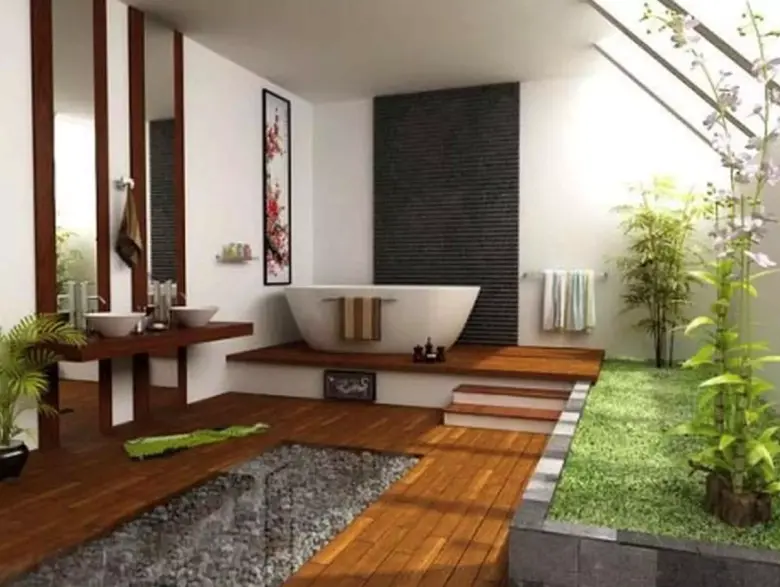
An example of a Feng Shui-style interior.
When to use it
• When a room feels blocked, chaotic, or uncomfortable even if it looks visually finished.
• When you want layout decisions to support calm, flow, and day-to-day wellbeing.
How to use it
• Declutter first, improve circulation, and place key furniture so movement through the room feels easy.
• Use light, plants, sound, and colour intentionally to support the kind of energy you want.
Read more about Feng Shui and how to apply them in interior design here.
Feng Shui in Interior Design: Tips, Principles, and Ideas to Bring It to Your Home
26. Urban Modern
Urban Modern is a popular interior design choice for many apartment dwellers thanks to its mixture of contemporary and industrial elements cushioned by warmer tones and soft furnishings. Minimal yet comfortable features might include plush fabrications or fluffy rugs, while large windows and steel-framed shelves give a nod to more factory-inspired settings.
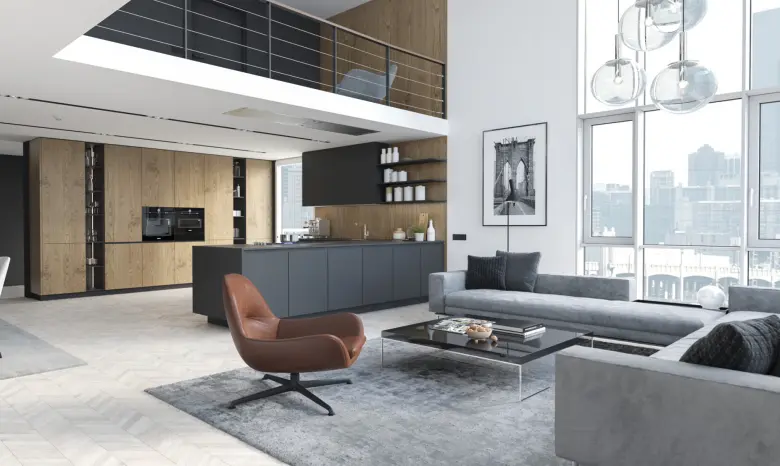
An example of an Urban Modern-style interior.
When to use it
• When city apartments need to feel contemporary without becoming cold or hard-edged.
• When you want an efficient layout softened by warmer finishes and more comfortable textures.
How to use it
• Combine clean-lined furniture with industrial details, organised zoning, and practical storage.
• Use rugs, upholstered seating, warmer woods, and layered lighting to make the space feel lived-in.
One of AND Academy's students, Aakriti Sharma, applied a similar urban-modern logic in the Captain Shetty co-working project, where the goal was to create a modern space that still felt warm and usable.
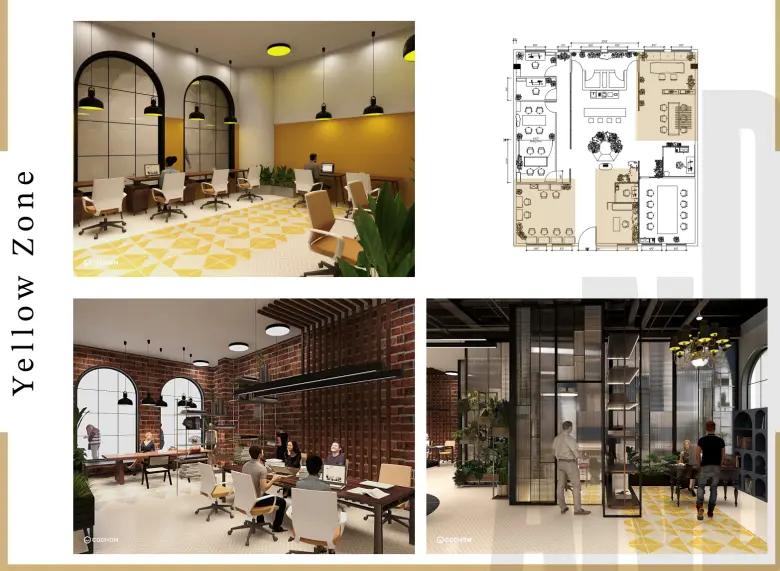
What she did
- She used urban-modern cues to make the workspace feel organised, current, and comfortable rather than sterile.
- She balanced contemporary and industrial references with a more human-scale interior experience.
How she did it
- She used clearer zoning, warmer finishes, and more inviting seating to soften the harder visual language often associated with modern commercial spaces.
- She relied on comfort, organisation, and material warmth to make the environment feel more usable day to day.
You can also see the student project here by clicking on this link.
Interior design styles that work best in Indian homes
A few style choices tend to suit Indian homes and climate especially well (adapt to your city, light and budget):
- Light and airy for hot climates: Minimalist, Scandinavian, Coastal and Japandi keep rooms bright and cool.
- Colour and craft that celebrate Indian heritage: Contemporary-Indian fusion, Maximalist and Eclectic, championed by designers like Gauri Khan, Raseel Gujral and Ashiesh Shah.
- Compact-home friendly: minimalist and transitional styles make small metro apartments feel larger.
FAQs
How many interior design styles are there?
There is no fixed number, as styles keep evolving and overlapping. This guide covers 26 of the most recognised, from modern and minimalist to bohemian and art deco.
Which interior design style is most popular in India?
Contemporary and minimalist styles dominate urban Indian homes, with Indian-contemporary fusion and Japandi rising fast. (Re-verify with current data at publish.)
How do I find my interior design style?
Start from how you want a room to feel, save images you are drawn to, and look for repeating colours, materials and shapes. The quick chooser above points you to matching styles.
What is the difference between an interior design style and a theme?
A style is a broad design language (for example minimalist), while a theme is a narrower decorative direction within it (for example coastal or festive).
Can I mix interior design styles?
Yes. Transitional and eclectic styles are built on blending. Keep one consistent colour palette so the mix looks intentional rather than cluttered.
Conclusion
We hope our rundown of these interior design styles has given you some food for thought. Whether you’re planning a full redesign of your home, or you’re just looking to freshen up one room, these approaches should provide plenty of inspiration and new ideas for colors, accessories, textiles, and furniture.
If you’d like to learn more about interior design, from India’s most popular designers to the fundamental principles and processes of the practice, check out our other interior design articles over on our blog.
You can also take a look at AND learner Pawanjot Singh’s Residential Interior Design project to see how certain styles of interior design translate into practice.
Next Steps
Ready to get started with interior design? Here are some additional resources you can consider:
- Watch this session by Snehanshu Mukherjee, Founding Partner at T.E.A.M and Mansi Almadi, an Interior Designer at Studio Lotus
- Talk to a course advisor to discuss how you can transform your career with one of our courses.
- Check out our Interior Design courses - all courses are taught through live, interactive classes by industry experts.
- Take advantage of our scholarship and funding options to overcome any financial hurdle on the path of your career transformation.
Note: All information and/or data from external sources is believed to be accurate as of the date of publication.