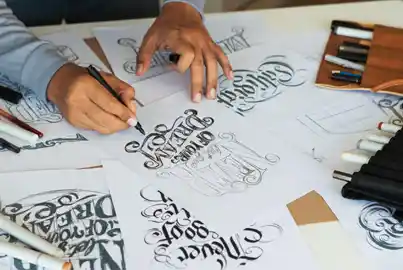


Foiling in design refers to a printing technique where a thin metallic or pigmented foil is applied to a material's surface. It uses heat and pressure on foil, so it attaches itself to specific areas of the design.
The process of foiling creates a distinct and lustrous finish. It makes text, logos, or graphics stand out. Foiling is often used to add a premium feel to a design, making it an appealing decorative element for printed products.
Embossing
It is used to create a raised or sunken image by pressing on the surface of a print design.
Here are the most common applications of foiling in a design -
Foiling is a printing process that can be done via two methods. The first method uses heat and pressure and is called hot foiling. The second method uses UV light and an adhesive to transfer a thin foil onto the surface, known as cold foiling.
In both methods, the foil attaches itself only to the designated areas. It creates a shiny, metallic design that makes specific areas stand out from the rest of the print.
Note: All information and/or data from external sources is believed to be accurate as of the date of publication.
Consult Course Advisors

Hire Our Graduate / Upskill Your Team
Become An Instructor