




This guide breaks down 11 real career options after a graphic design course in India, including salaries, hiring companies, and long-term growth paths in 2026.
SUMMARISE WITH:


This guide breaks down 11 real career options after a graphic design course in India, including salaries, hiring companies, and long-term growth paths in 2026.
You've finished a graphic design course, or you're considering one, and you want to know what's actually on the other side. Not the brochure version. The real version, with INR numbers, named Indian companies, and an honest take on which paths are growing in 2026 and which ones are quietly saturated.
This guide lists 11 real career options after a graphic design course in India, grouped by where you actually go to work each day. For each role, we'll show you what the work looks like day-to-day, where graduates from a graphic design course are hired in India, the INR salary band by experience, and our honest assessment of growth potential and ceiling.
Here is what we have covered in this blog:
- Why Indian Graphic Design Careers Don't Look Like What Most Articles Describe
- Graphic Design Jobs at Studios and Agencies in India
- In-House Graphic Design Jobs at Product Companies in India
- Freelance and Independent Career Paths for Graphic Designers in India
- How to Pick Your First Graphic Design Job in India
- Graphic Designer Salary Progression in India: Year 1 to Year 5
- Frequently Asked Questions About Graphic Design Careers in India
- Next Steps
Why Indian Graphic Design Careers Don't Look Like What Most Articles Describe
Most "career options after graphic design" articles on the internet are written for a market that doesn't exist anymore. The default template is a list of 10 generic roles (visual designer, art director, illustrator, web designer, packaging designer, and so on) with no INR data, no Indian companies named, and no honest commentary on which roles are growing.
The Indian graphic design market in 2026 has shifted in three structurally important ways that those articles haven't caught up with.
First, the dominant employer for new graphic design graduates is no longer the advertising agency. It's the product company. Razorpay, Cred, Swiggy, Zomato, Meesho, Groww, Flipkart, Nykaa, and a hundred other product startups now employ more graphic and visual designers in India than the entire traditional ad agency ecosystem.
Second, motion design has gone from niche specialty to one of the highest-leverage paths available. Brand video and short-form motion are now baseline assets for every consumer brand. The demand has outpaced supply in India.
Third, the pivot from graphic design into product design (UI UX) is now the single most common high-leverage move within two years of finishing a graphic design course. We see this pattern repeatedly at AND Academy and across hiring networks.
The 11 roles below are organized around that reality.
Graphic Design Jobs at Studios and Agencies in India
This is where many graduates still start, and where the deepest craft training happens. The pay is typically moderate at entry level, the variety is high, and the work is often the most visually ambitious you'll do in your career.
Brand Designer
- What you do: Develop visual identity systems (logos, type, color palettes, brand guidelines, applications) for client brands or in-house brand teams.
- Where you work: Indian branding studios (Locopops, Codesign, AT Designs, Itu Chaudhuri Design, Wolff Olins India, The Branding Studio), in-house brand teams at Tata, ITC, HUL, RPG Group, large advertising agencies (Ogilvy, Wieden+Kennedy, Dentsu).
- Salary Range: ₹4 to 7 LPA at studios in year one, ₹5 to 9 LPA at large agencies and in-house teams.
- Growth trajectory: ₹8 to 15 LPA by year three, ₹15 to 30 LPA by year five as a senior brand designer or design lead. Strong path into Creative Director roles by year seven or eight.
- Honest assessment: One of the strongest career paths from a graphic design course in India, but saturated at the entry level. Portfolio quality decides who rises fast.
The brand designer role rewards depth of thinking more than software fluency. Work cycles are typically four to twelve weeks per project, with heavy upfront research, sketching, exploration, and stakeholder management. If you're drawn to long-form thinking and you enjoy storytelling around a single brand, this is the path.
Visual / Graphic Designer (Generalist)
- What you do: General-purpose visual design across formats including print, digital, presentations, social media, and internal communications.
- Where you work: Mid-size design firms, in-house marketing teams at smaller companies, multi-client studios.
- Salary Range: ₹3 to 5 LPA at smaller studios in year one, ₹4 to 6 LPA at established firms.
- Growth trajectory: ₹6 to 10 LPA by year three, ₹10 to 18 LPA by year five after specialising.
- Honest assessment: The most common starting role, but it has the lowest ceiling if you don't specialise. Most successful designers from here pivot into brand, motion, or product design within two to three years.
If you're going to take a generalist role at the start, treat it as a paid apprenticeship. Use it to figure out which kind of work energises you, then specialise hard by year two. Generalists who never specialise tend to stagnate around the ₹10 LPA mark.
Motion Designer
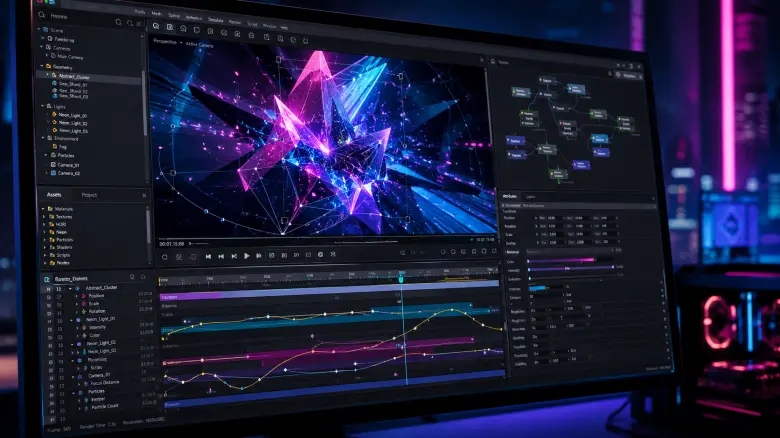
- What you do: Create animated content for social media, brand films, advertisements, app explainers, and motion graphics for video. Tools include After Effects, Cinema 4D, increasingly Runway and other AI-augmented motion tools.
- Where you work: Motion-focused studios (Tinker, Animal, Studio Eeksaurus, Plexus), advertising agencies for film and digital work, in-house at product startups for app explainers and brand video.
- Salary Range: ₹4 to 7 LPA at studios in year one, ₹6 to 10 LPA in-house at funded product startups.
- Growth trajectory: ₹10 to 18 LPA by year three, ₹18 to 35 LPA by year five.
- Honest assessment: Currently one of the highest-leverage paths in Indian graphic design. Brand video has exploded in India, AI tools are accelerating output, and demand is outpacing supply.
Motion design requires investing in After Effects and adjacent software during or after your course, since most graphic design curricula don't go deep on motion. If you have the temperament for animation (patience for keyframes, attention to timing, comfort with iteration), this is the best ROI specialisation available right now.
Packaging Designer
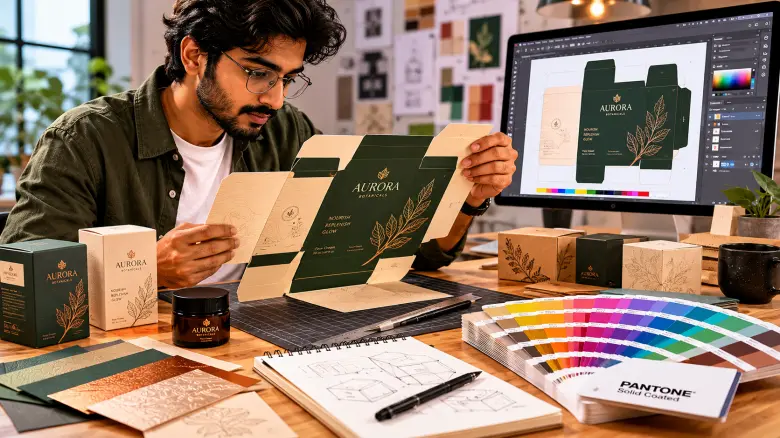
- What you do: Design product packaging for FMCG, food and beverage, cosmetics, and consumer products. The work is heavy on production knowledge (printing techniques, material constraints, shelf impact), regulatory compliance, and brand consistency across SKUs.
- Where you work: FMCG companies (HUL, ITC, Nestle India, Tata Consumer Products, Marico), packaging design specialists (Elephant Design, Lopez Design, DesignSutra), structural packaging firms.
- Salary Range: ₹4 to 7 LPA at packaging specialists in year one, ₹5 to 9 LPA at FMCG in-house teams.
- Growth trajectory: ₹9 to 16 LPA by year three, ₹16 to 30 LPA by year five, especially in FMCG companies with structured corporate growth ladders.
- Honest assessment: An underrated path. Less glamorous than brand or motion, more predictable income and growth, and a clear ladder.
Packaging design rewards rigour and patience. Cycles are slower than agency work, but the corporate environment offers stability that branding studios rarely match. If you're drawn to consumer products and you don't mind a more structured work culture, this path is genuinely strong.
Illustrator (Editorial and Commercial)
- What you do: Create illustrations for editorial publications, books, advertising, brand assets, and product surfaces (icons, characters, product illustrations). Often combined with motion or animation work.
- Where you work: Editorial publications (Mint Lounge, The Caravan, Open Magazine, Scroll), publishing houses (Penguin India, HarperCollins India), advertising agencies, in-house at consumer brand and product startups.
- Salary Range: ₹3 to 6 LPA salaried in year one. Freelance varies dramatically based on style and visibility.
- Growth trajectory: ₹6 to 12 LPA salaried by year three, ₹12 to 25 LPA salaried by year five. Strong freelance practices can outperform this significantly.
- Honest assessment: A passion-driven, style-driven path. Hard to commodify if your work has a distinct voice. The Indian illustration market is quietly bifurcating into editorial work (lower pay, higher creative satisfaction) and commercial product work (higher pay, less editorial freedom).
Illustrators benefit from a recognisable style more than any other role on this list. If you're considering illustration, your first three years should be about finding and sharpening your visual voice, not chasing breadth.
In-House Graphic Design Jobs at Product Companies in India
This is where the money has moved over the last five years, and where the highest first-year salaries for graphic design graduates now live. The work is tighter in scope than agency work, but the compensation, equity, and career growth often outperform.
Visual / UI Designer (Product Team)
- What you do: Design screens, components, marketing pages, in-product visuals, and brand surfaces for a product company. Tighter focus than agency design, with closer ties to engineering and product management.
- Where you work: Indian product companies (Razorpay, Cred, Zomato, Swiggy, Meesho, Groww, Zerodha, Flipkart, Myntra, Nykaa), and well-funded startups.
- Salary Range: ₹6 to 12 LPA at funded product companies in year one, ₹4 to 8 LPA at smaller startups.
- Growth trajectory: ₹12 to 20 LPA by year three, ₹20 to 40 LPA by year five (with equity often outpacing salary growth).
- Honest assessment: Currently the highest-paid first job available to a graphic design graduate in India, if you can break into a strong product team. Portfolio focus on screen and digital work is non-negotiable.
To break in here directly out of a graphic design course, your portfolio needs to demonstrate digital and screen work, not just print and brand. Most graphic design programs need supplementing with Figma practice and one or two digital case studies. Worth the effort: the salary gap between studio and product employment for graphic design graduates is significant from year one.
Marketing / Content Designer
- What you do: Design marketing assets (landing pages, ad creative, email templates, social media), produce volume creative for paid acquisition, build templates for marketing teams.
- Where you work: SaaS companies, D2C brands (Mamaearth, BoAt, Nykaa, The Whole Truth), e-commerce companies, EdTech.
- Salary Range: ₹4 to 8 LPA in year one.
- Growth trajectory: ₹8 to 14 LPA by year three, ₹14 to 25 LPA by year five as a marketing design lead.
- Honest assessment: Often dismissed by graphic design graduates as "too commercial". The strong ones quietly move into design leadership at growth-stage startups, where design organisations are built around marketing.
Marketing design is high volume work. If you enjoy fast turnaround, A/B test thinking, and seeing your work in performance metrics, it suits you. If you want long-form craft on a single brand, it doesn't.
UI UX Designer (The Transition Path)
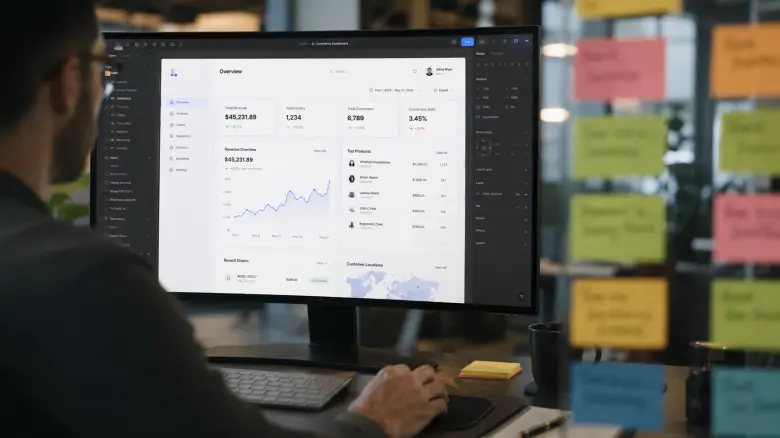
- What you do: Design product interfaces, user flows, research-informed design decisions. Work alongside product managers and engineers. This is a different discipline from pure graphic design, but accessible from a graphic design foundation with focused portfolio work.
- Where you work: Same product companies as Visual/UI Designer above, plus tech consultancies (Wipro, Infosys design teams, Accenture Interactive) and startups.
- Salary Range: ₹6 to 12 LPA in year one (with a UI UX-specific portfolio).
- Growth trajectory: ₹15 to 25 LPA by year three, ₹25 to 50 LPA by year five.
- Honest assessment: The highest-paying first job available to graphic design graduates, but only with extra portfolio work on user flows, app and web design, and user research. Most graphic design curricula don't cover this. You'll need to add it.
This is not a direct path from a graphic design course alone. The cleanest transition we see at AND Academy looks like this: spend six to twelve months at a product company doing visual or marketing design, build a UX-flavoured portfolio in your evenings (or take a structured UI UX course alongside your job), then internal-transfer or external-pivot into a UI UX role by month eighteen. Done well, this transition unlocks the highest salary curve available to a graphic design graduate in India.
Freelance and Independent Career Paths for Graphic Designers in India
These paths usually come later in a career, not at the start. Knowing they exist (and roughly when to consider them) matters for long-term planning.
Freelance Graphic Designer
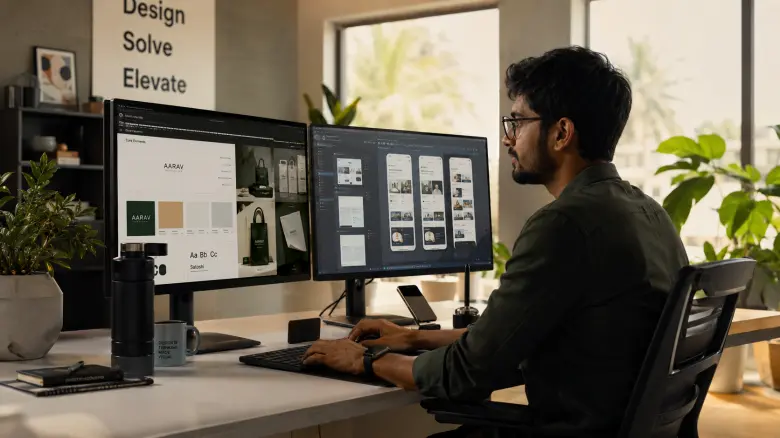
- What you do: Project-based client work, typically in a specialisation (brand, social, motion, illustration, packaging).
- Where you work: Independent practice. Clients sourced via Behance, Dribbble, LinkedIn, network referrals, and increasingly Indian platforms like Skill Slash and Refrens.
- Salary Range: ₹3 to 6 LPA equivalent in year one of full-time freelance (unstable, often less initially). Top 10% of freelancers by year three can exceed ₹15 LPA equivalent. Top freelancers with a brand by year five can earn ₹25 to 50 LPA equivalent.
- Honest assessment: High variance. The top 10% outperform salaried designers. The bottom 50% earn less than salaried designers and have less stability. Do not freelance straight out of college unless you have unusual circumstances or a strong existing client base.
The clearest pattern we see at AND Academy: designers who spend two to four years salaried first, then go freelance, do significantly better than designers who freelance straight out of their course. The two to four years build skill, network, and reputation, which is what actually drives freelance income.
Design Educator / Mentor
- What you do: Teach at design schools, run workshops, mentor students. Often combined with active practice (most good faculty in India also have ongoing client or studio work).
- Where you work: Design schools (AND Academy, Pearl, MIT Institute of Design, ISDI, Srishti, Indus Valley), online platforms, in-house corporate design education programs.
- Salary Range: ₹4 to 12 LPA for full-time faculty, depending on institution and seniority. Visiting faculty rates vary widely.
- Honest assessment: Not a first-job path. Most educators come to teaching after three to five years of practice. Worth knowing as a future option, especially for designers who enjoy mentorship.
The economics often look better than they first appear. Strong faculty members typically combine teaching salary with ongoing consulting, freelance, or studio income. The combined number can be very competitive with senior in-house design roles.
Studio Founder / Design Entrepreneur
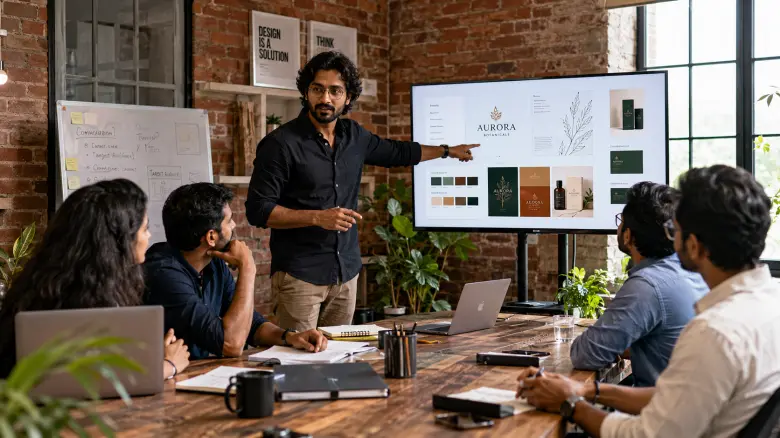
- What you do: Start your own design studio, agency, or design-led product company. Lead a team, manage clients, build the business.
- Where you work: Your own studio. Many of the strongest Indian design studios were founded by designers within five to eight years of starting their careers.
- Salary Range: Year one of founding usually means lower income or break-even. Successful founders within three to five years can pull ₹25 LPA+ from the business, with equity upside.
- Honest assessment: A five-to-eight year path, not a first-job path. High ceiling, high variance.
If you're entrepreneurially inclined, plan for it now by paying attention to studio operations during your salaried years. The most successful Indian studio founders watched the business side of their early employers carefully and applied those lessons when they founded.
How to Pick Your First Graphic Design Job in India
The most useful framework we've found at AND Academy boils down to three questions. Answer them honestly and the right first role usually becomes obvious.
Question 1: Do you want to work across many clients (agency or studio) or deep on one product (in-house product team)?
Studios reward breadth and storytelling. Product teams reward depth and systems thinking. Both are real choices.
Question 2: Do you want fast creative iteration (motion, marketing design, brand exploration) or longer cycles with more polish (packaging, brand identity systems, editorial illustration)?
Some designers thrive on output velocity. Others need the long arc.
Question 3: Do you want to stay hands-on craft long-term, or eventually transition into leadership and strategy?
Some paths (motion, illustration, packaging) reward technical mastery indefinitely. Others (brand, product, marketing) eventually push you into managing teams and shaping strategy if you want the salary curve to keep going up.
The honest pattern: most graphic design graduates in India do their best work in their first three years by going either deep-product or deep-motion. Studio generalist roles are great learning environments, but the designers who plateau early are usually the ones who stayed generalist past year two.
Graphic Designer Salary Progression in India: Year 1 to Year 5
A quick summary of where the curves land. All figures in INR LPA, approximate ranges based on AND Academy alumni placements and broader Indian design hiring data.
Role |
Year 1 |
Year 3 |
Year 5 |
|---|---|---|---|
Brand Designer |
4 to 9 |
8 to 15 |
15 to 30 |
Visual / Graphic Designer (Generalist) |
3 to 6 |
6 to 10 |
10 to 18 |
Motion Designer |
4 to 10 |
10 to 18 |
18 to 35 |
Packaging Designer |
4 to 9 |
9 to 16 |
16 to 30 |
Illustrator |
3 to 6 |
6 to 12 |
12 to 25 |
Visual / UI Designer (Product) |
6 to 12 |
12 to 20 |
20 to 40 |
Marketing / Content Designer |
4 to 8 |
8 to 14 |
14 to 25 |
UI UX Designer (After Transition) |
6 to 12 |
15 to 25 |
25 to 50 |
Freelance (Specialised, Year 1 Solo) |
3 to 6 |
8 to 20 |
20 to 50 |
Two patterns stand out across these numbers. First, the year-five spread is enormous. The same starting point can lead to ₹10 LPA or ₹40 LPA depending entirely on specialisation and the quality of decisions made between years two and four. Second, the highest-growth specialisations in 2026 are motion, product UI, and the UI UX transition. The lowest-growth specialisation is the unspecialised generalist track.
One failure pattern worth flagging. Designers who stay at services agencies or small in-house teams without specialising tend to plateau between ₹8 and ₹12 LPA by year four. If you find yourself in that pattern, course-correct hard. Specialise, build a portfolio in the new specialisation in your evenings, and switch employers.
Frequently Asked Questions About Graphic Design Careers in India
Which graphic design role pays the most in India?
By year five, the highest-paid paths are:
- UI UX Designer (after a portfolio transition): ₹25 to 50 LPA
- Motion Designer at funded product companies: ₹18 to 35 LPA
- Visual / UI Designer at product companies: ₹20 to 40 LPA
- Senior Brand Designer or Creative Director track: ₹15 to 30 LPA
The UI UX path leads the pack, but it requires roughly twelve to eighteen months of focused portfolio work beyond a graphic design course.
Should I take a UI UX course alongside graphic design?
If your goal is to maximise first-job salary and long-term career ceiling, yes. The graphic design plus UI UX combination is the strongest pairing in India in 2026. You can take both sequentially (graphic design fundamentals first, then UI UX) or layered, depending on your timeline.
Is graphic design a good career in India in 2026?
Yes, with a caveat. Graphic design as a generalist career is harder than it was ten years ago. Graphic design with a clear specialisation (brand, motion, product, packaging, or UI UX transition) is a strong career with multiple paths to ₹20 LPA+ by year five.
Should I freelance straight out of a graphic design course?
We strongly recommend against it. Spend two to four years salaried first to build skill, network, and reputation. Then freelance from a position of strength. The data is consistent: freelancers who started salaried earn significantly more and have more stable practices than freelancers who started independent.
Which Indian companies hire graphic designers?
Across the categories above, the active hirers in 2026 include product companies (Razorpay, Cred, Zomato, Swiggy, Flipkart, Meesho, Groww, Zerodha, Nykaa, Myntra), branding studios (Locopops, Codesign, AT Designs, Itu Chaudhuri Design), FMCG (HUL, ITC, Nestle India, Tata Consumer Products), agencies (Ogilvy, Wieden+Kennedy, Dentsu), motion studios (Tinker, Animal, Studio Eeksaurus), and D2C brands (Mamaearth, BoAt, The Whole Truth).
How do I transition from graphic design to product design?
The pattern that works: take a visual or marketing design job at a product company, build a UI UX portfolio in your evenings (or take a structured UI UX course), then internal-transfer or external-pivot into a UI UX role by month eighteen. The pivot is well-trodden and the salary jump is significant.
Graphic design vs UI UX: which career has better growth in India?
UI UX has the higher salary curve and the higher year-five ceiling, but graphic design has more entry-level pathways and broader applicability. Most strong designers we see end up working across both at some point in their careers. The right framing isn't graphic design vs UI UX. It's graphic design plus UI UX, sequenced over the first two to three years of your career.
Next Steps
Picking the right first role is genuinely the highest-leverage decision you will make as a graphic design graduate. It determines your specialisation, your network, and your salary curve by year three.
If you are still mapping out which of these paths fits your background, the AND Academy admissions team does free career calls. You bring the questions, they bring the honest answers, including if a different path makes more sense for you than any of our programs.
You can also review the full curriculum for our Graphic Design courses and our UI UX courses to see exactly what portfolio work each track builds toward.
No pressure, no pitch. Just a clearer picture of where to go next.
Note: All information and/or data from external sources is believed to be accurate as of the date of publication.