


Logos form the foundation of a strong brand identity—but what exactly is logo design and why does it matter? Consider this guide your ultimate introduction.
SUMMARISE WITH:


When you visualise your favourite brands, you can probably conjure up their logos from memory. At the very least, there are certain logos that you’d recognise anywhere—like the universal McDonald’s logo or the iconic Twitter bird.
These logos don’t just happen. Logo design is its very own art form, requiring specialist know-how, a careful process, and adherence to specific principles.
In this guide, we’ll cover everything you need to know about logo design, including:
- What is logo design and why does it matter?
- What does a logo designer do?
- What are the main elements of a logo?
- What are the different types of logos?
- What are the 6 key principles of effective logo design?
- An introduction to the logo design process
- Logo Design FAQs
- Learn more about logo and graphic design
- Next Steps
Let’s begin.
What is logo design and why does it matter?
Logo design is a core tenet of graphic design—and, more specifically, of graphic design for branding. Logo designers are tasked with creating unique, memorable logos that capture the brand’s identity and spark instant recognition in the viewer.
A logo is, quite simply, a visual representation of the brand. But logo design itself isn’t simple! It requires a deep understanding of the brand’s core values, and the ability to translate those values into a timeless yet versatile visualisation.
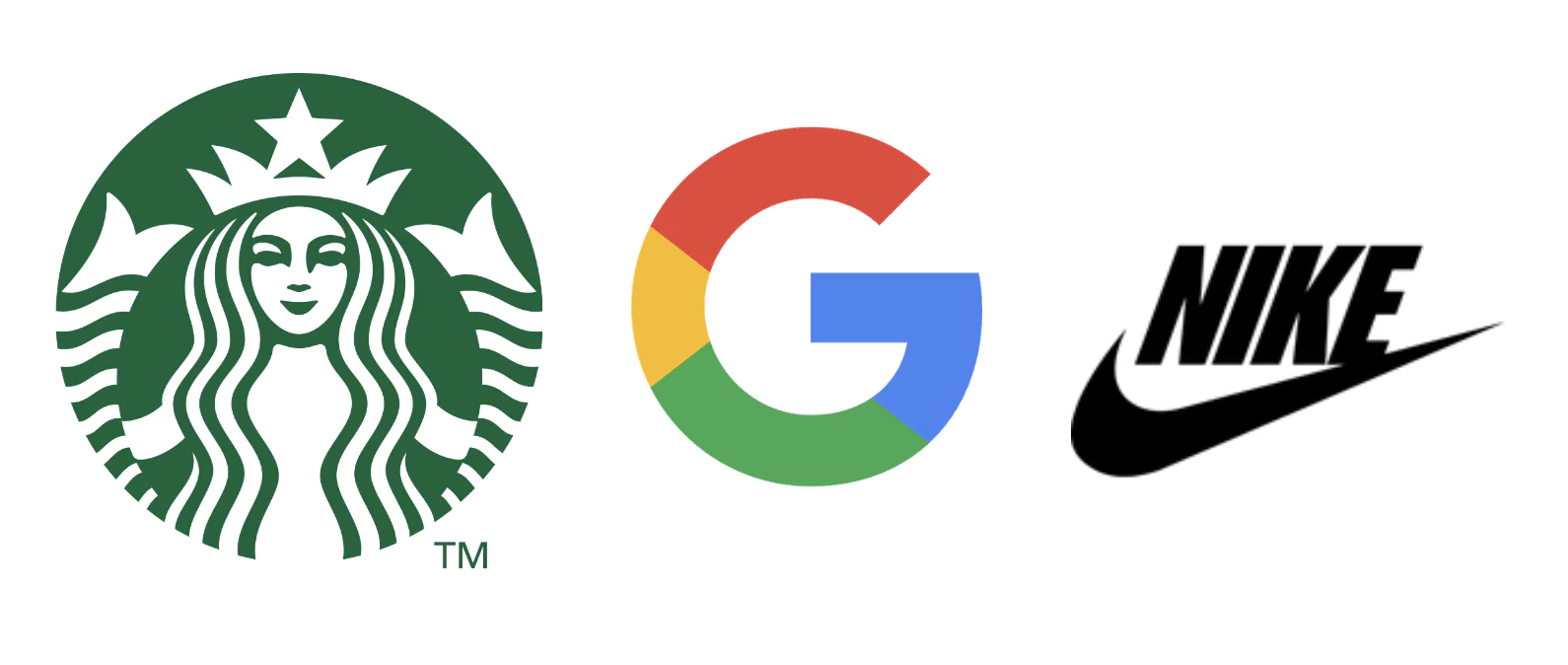
Think about the famous Nike “swoosh”, the iconic Google “G”, or the elaborate two-tailed siren that we immediately associate with Starbucks. All of these logos form the basis of the brands’ identities—and have no doubt played an integral role in their success.
You can’t cultivate a strong brand identity without a strong logo. A well-designed logo provides consistency, builds familiarity, and helps the brand connect with its target audience.
The importance of logo design is not to be underestimated—and you can’t always expect to get it right the first time. But, when you do finally nail it, you’ll have laid the foundation for a successful brand.
Now that we know why logo design matters, let’s take a look at what actually goes into the process—starting with the individual components that make up a logo.
What does a logo designer do?
A logo designer turns a brand's identity into one instantly recognisable mark. It's a lot more than making something look nice. The work runs through research, strategy, and craft. In practice, a logo designer:
- Studies the brand first: its values, personality, audience, and competitors, before sketching a single thing.
- Develops concepts, from rough sketches to polished digital drafts.
- Picks the visual language: the colour, typography, and form that fit the brand's tone.
- Tests and refines the mark across sizes, backgrounds, and formats so it holds up everywhere.
- Writes usage guidelines so the logo gets applied consistently wherever the brand shows up.
So a logo designer is part researcher, part strategist, part artist. If that mix appeals to you, our guide on how to become a graphic designer is a good next step.
One thing our faculty see again and again with beginners: they start in Illustrator before they understand the brand. The tool is the last 20% of the job. The first 80% happens on paper and in conversation with the client.
For inspiration, see the work of the most famous logo designers and the brands they built.
Now, on to what actually makes up a logo.
What are the main elements of a logo?
Most logos are built on three core elements: Colour, text, and imagery.
i. Colour
Colour plays a critical role in logo design. First and foremost, different colours can evoke different emotions and associations in the target audience. For example, a bright pink logo might exude a bold, fun, playful air, while a soft green logo might evoke a sense of calm, closeness to nature, and freshness. At the same time, colour is essential for creating balance, harmony, and contrast—ensuring that the logo is not only aesthetically pleasing, but also easy to read and understand.
ii. Text
The use of text in logo design varies greatly from one logo to the next. Some logos contain no text whatsoever—think of the Apple logo, which is simply a picture of an apple. Some logos comprise just one letter, like the McDonald’s logo featuring the iconic “M”, while others include the full brand name, like the famous FedEx logo.
If you do incorporate text within your logo design, it must be clear, legible, and styled in line with the brand identity. That’s where the art of typography comes in—another core tenet of graphic and logo design.
You can learn all about typography in this guide: What Is Typography? Everything You Need To Know.
iii. Imagery
Imagery in logo design can range from simple outlines and icons to abstract symbols, right through to elaborate illustrations—and anything else in between. Sometimes, letters are used to form imagery. And, of course, some logos don’t contain any imagery at all. It all depends on what type of logo is being designed, and on the brand personality and values the logo designer wants to convey.
As with colour and text, it’s crucial that the viewer can easily make sense of any imagery used. Ideally, they should be able to decipher the imagery at a glance and recognise what it’s trying to represent. As such, logo imagery must be meaningful and relevant to the brand in question.
What are the different types of logos?
Logos generally fall into seven types, and which one fits depends entirely on the brand:
- Wordmark logos the full brand name (Coca-Cola, Disney, Amul)
- Lettermark logos initials or a monogram (IBM, NASA)
- Pictorial mark logos a single recognisable icon (Apple, Twitter)
- Abstract logos a non-literal symbol (Nike, Spotify)
- Emblem logos text inside a badge, crest, or seal (NFL, Starbucks)
- Mascot logos an illustrated character (KFC, the Amul girl)
- Combination logos text and image together (Mastercard, Zomato)
Each type has its strengths, its best use cases, and its traps. For the full breakdown of all seven, with real examples and guidance on when to use each, read our dedicated guide: The 7 Different Types of Logo Design (With Examples).
What are the 6 key principles of effective logo design?
Logo designers have plenty of creative freedom. You’ll notice that no two logos are the same! But, no matter what kind of logo you’re designing, there is a guiding set of principles that all logo designers must follow.
These are:
- Simplicity
- Originality
- Versatility and scalability
- Clarity and legibility
- Timelessness
- Brand alignment
Let’s explore each of these principles in detail and consider how they contribute to effective logo design.
i. Simplicity
Logo design can be tricky because you have limited space. Logos don’t typically take centre stage; they’re usually tucked away in the corner of a website or competing for space alongside other crucial information.
Often, the most impactful logos are the simple ones. They make a powerful statement with just a few key elements; a simple icon like the Nike “swoosh” or a bold wordmark.
Ultimately, the simpler your logo, the easier it will be for people to decipher and understand—and the easier it will be to reproduce in different sizes and contexts.

ii. Originality
A logo is the very cornerstone of a strong brand identity, and you can’t forge a strong brand identity if you’re not creating something unique.
The target audience should instantly recognise a logo as belonging to a particular brand. At the same time, it must be unique enough to be memorable—something that stands out and sticks in people’s minds.
While it’s useful to take inspiration from competitors, you don’t want to fall into the trap of replicating their logos or creating something too similar. This will only lead to confusion and ‘forgettability’.
iii. Versatility and scalability
When designing a logo, you’re never just designing for one single context. That logo will be used across the company website, social media, digital and printed marketing materials, product packaging, signage, internal documentation, email signatures—anywhere the brand has a presence!
It’s therefore crucial that the logo be versatile and scalable. It must look great and accurately convey the brand identity regardless of where it appears, how big or small it is, across both digital and print media, and in different colour combinations.
iv. Clarity and legibility
The best logos seem to seep into people’s consciousness without requiring them to ever really study or scrutinise the logo. That’s because the best logos are instantly clear and easy to comprehend—no second glance or closer look needed. You can ensure your logo design is clear and legible by keeping it simple, leaving plenty of whitespace between elements, and creating sufficient colour contrast.
v. Timelessness
A great logo is for life. You can’t change your logo every few years—that defeats the purpose of building familiarity and recognition. The best logos stand the test of time; they don’t go out of date or lose relevance with the passing of trends. The goal is to design something simple, iconic, and evergreen that will be as powerful in twenty years’ time as it is right now.
vi. Brand alignment
Last but certainly not least, effective logo design must consider the brand. Every choice you make when designing a logo—from colour and typography to imagery, spacing, and texture—should be informed by the brand values and personality you want to convey.
Compare the Cartier logo to the LEGO logo. The former is for a luxury goods brand; the latter for a toy production company. They’re totally different, but they each do a stellar job of capturing the essence of the brand.
Now let’s consider how you might approach the task of designing a new logo from scratch.
An introduction to the logo design process

An effective logo must capture the brand values, evoke the right tone, and resonate with the target audience. As such, the logo design process starts with understanding the brand identity. Logo designers will spend time getting to know the brand story, learning about the company’s target users, and brainstorming how that might be captured in visual form.
Next comes the research and inspiration phase. This step is all about looking at competitors and figuring out what seems to resonate within that specific market or industry. At this stage, logo designers might create a mood board and start thinking about the general look and feel of the logo, taking inspiration from some of the most popular logo design trends.
Once you’ve decided what type of logo you’ll design (think back to the seven types of logo we outlined earlier), you can start sketching out initial ideas and concepts. You might do rough sketches with pencil and paper first, or go straight to basic digital mock-ups.
As your logo starts to take shape, you’ll finalise the outline using your chosen logo design software—or at least a few different versions thereof. Your logo will move through various iterations as you experiment with different colours, typography, spacing, and compositions.
Happy with how your logo is shaping up? The next step is to put it in front of key stakeholders for feedback and to test it in different contexts to make sure that it’s versatile, adaptable, and scalable. You’ll refine and improve your logo design until it’s ready for launch.
That’s the logo design process in a nutshell. Learners enrolled in AND’s Graphic Design courses explore these principles comprehensively and are provided with a Brand Identity project to implement their knowledge. Although, it is important to note that in this project learners explore much more than logo design and learn to design iconic and functional visual design systems for brands from scratch.
6. The best logo design tools and software
Here’s a sneak peek at some of the most popular logo design tools to get you started:
- Canva: a free and easy logo maker tool featuring customisable templates, an extensive library of icons, photos, and illustrations, and a user-friendly drag-and-drop interface throughout.
- Adobe Illustrator: a popular and versatile vector graphics design software offering all the tools you need to design a unique logo. Create your logo from scratch or begin with a template.
- LogoMakr: a free online tool for quick and easy logo design. Start with a blank canvas or edit an existing template, and browse the extensive library of icons and fonts.
- Smashing Logo: a tool for non-designers (or those who don’t want to be as hands-on with the logo design process). Smashing Logo simplifies the process of creating a logo, taking you through each step—from choosing brand keywords to selecting colours and icons.
- Looka: an AI-powered logo design tool that generates custom logo designs based on your preferences. Again, this is a shortcut for those who don’t want to go through the process of designing a logo from scratch.
Logo Design FAQs
What is logo design?
Logo design is the process of creating a unique visual mark, using colour, typography, and imagery, that represents a brand and makes it instantly recognisable. It's a specialist area of graphic design focused on capturing a brand's identity in one versatile symbol.
Why is logo design important?
A logo is the cornerstone of a brand's identity. A strong one builds recognition, signals professionalism, keeps things consistent across every touchpoint, and gives people a reason to remember the brand.
What does a logo designer do?
A logo designer researches the brand, develops and refines concepts, and chooses the colour, typography, and form that best fit the brand's personality, then tests the mark across sizes and contexts so it works everywhere.
What makes a good logo?
Good logos follow six principles: simplicity, originality, versatility and scalability, clarity and legibility, timelessness, and brand alignment. The best ones are simple enough to recognise at a glance, yet distinctive enough to remember.
How do I start designing a logo?
Start by understanding the brand and its audience. Research competitors for inspiration, decide which type of logo fits, then sketch concepts, refine them in design software, and test across contexts before you finalise.
Learn more about logo and graphic design
Logo design is just one tenet of the broad and varied field that is graphic design. If you’re learning about logo design with the goal of becoming a graphic designer, consider a graphic design course. This will equip you with the full spectrum of skills required to work in the industry—from the fundamentals of visual design right through to brand narratives and communication, campaign design, motion graphics, and everything else in between.
Not ready for a course? Continue learning with these guides:
- An Introduction to the 8 Different Types of Graphic Design (With Examples)
- A Complete Guide to Motion Graphic Design
- The Fundamental Graphic Design Principles and How to Apply Them
Next Steps
In case you’re still not entirely sure, here are some of our own resources to help you make your decision:
- Watch this session with design veteran and AND Academic Head Prachi Mittal and Course Lead Soumya Tiwari.
- Talk to a course advisor about where design could take your career.
- Explore our Graphic Design courses - : live, interactive classes taught by working designers, some with a Job Guarantee.
- Check the scholarship and funding options that come with our courses.
Note: All information and/or data from external sources is believed to be accurate as of the date of publication.