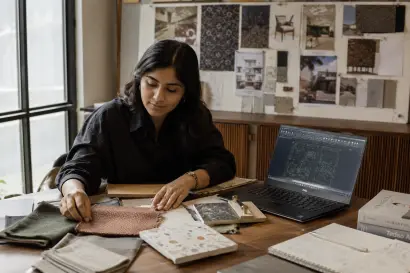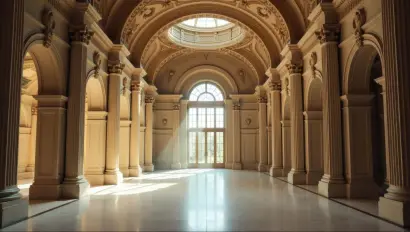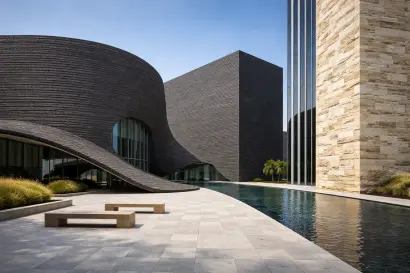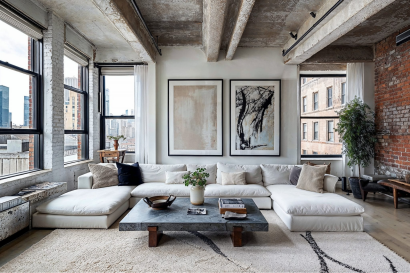





Read this comprehensive guide to learn how interior designers can use material science to cool down houses naturally!
SUMMARISE WITH:


As energy costs continue to rise and sustainability becomes a priority in residential and commercial projects, clients are asking interior designers to create beautiful and energy-efficient spaces. While mechanical cooling systems such as air conditioners remain common, passive cooling strategies offer an opportunity to improve comfort while reducing energy consumption. One of the most promising areas in this field is material science.
Material science has transformed the way designers think about interiors. Today’s advanced materials can help regulate temperature, reflect heat, improve airflow, and create more comfortable environments without relying heavily on energy-intensive cooling systems. Understanding these innovations allows interior designers to play a larger role in creating sustainable buildings.
Here is a brief of everything that we will be covering in this blog.
- Understanding Passive Cooling
- Why Passive Cooling Matters More Than Ever
- The Science Behind Thermal Performance
- High-Reflectance Surfaces and Finishes
- Phase Change Materials
- Advanced Flooring Materials
- Aerogels and Next-Generation Insulation
- Radiative Cooling Materials
- Smart Glass and Interior Applications
- Smart Textiles and Interior Furnishings
- Natural Materials With Modern Applications
- Moisture Management and Perceived Comfort
- Combining Passive Cooling With Biophilic Design
- Integrating Material Science Into Interior Design Practice
- Biomimicry and Nature-Inspired Cooling Solutions
- Retrofitting Existing Spaces With Passive Cooling Materials
- Color Psychology and Thermal Perception
- The Future of Passive Cooling
- FAQs on Passive Cooling and Material Science
- To Sum Up
Understanding Passive Cooling
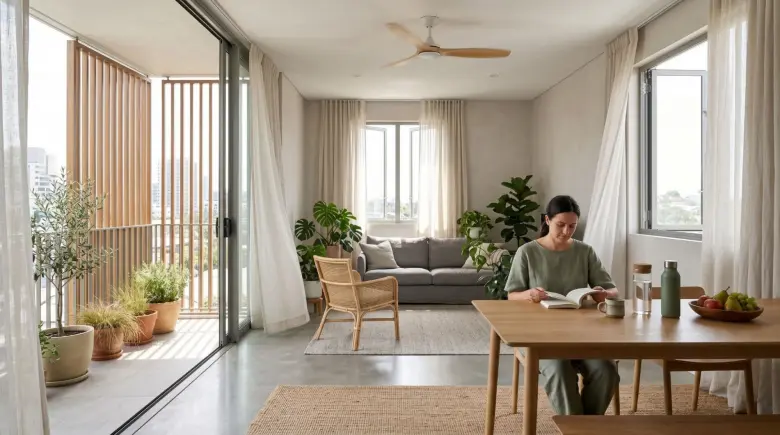
Passive cooling refers to design techniques that reduce indoor temperatures without the use of mechanical systems. Instead of consuming electricity to cool a space, passive cooling minimizes heat gain and maximizes natural heat dissipation.
Historically, passive cooling relied on architectural features such as thick walls, shaded courtyards, and strategically placed windows. Modern material science builds on these principles by introducing advanced components that actively contribute to thermal management. For interior designers, this means that flooring, wall finishes, furnishings, textiles, and surface treatments can all become tools for improving thermal comfort.
Why Passive Cooling Matters More Than Ever
Buildings account for approximately 30% of global energy consumption, and cooling demand is expected to rise as temperatures increase worldwide. Many regions are already experiencing longer and more intense heat waves, placing additional strain on power grids and increasing operational costs for property owners.
Interior designers are uniquely positioned to address this challenge. Material choices affect how much heat enters a space, how long it remains there, and how comfortable occupants feel throughout the day.
A well-designed interior can reduce reliance on air conditioning, lower utility bills and improve occupant well-being. It can also contribute to green building certifications and sustainability initiatives, which are increasingly important to clients.
The Science Behind Thermal Performance
Every material interacts with heat differently. Some absorb and store heat, while others reflect it. Some allow heat to pass through quickly, while others act as insulators. Three key thermal properties influence a material’s cooling performance:
- Thermal conductivity: How easily heat moves through a material
- Thermal mass: A material’s ability to absorb and store heat energy
- Solar reflectance: The amount of solar radiation reflected away from a surface
By understanding these properties, designers can make informed decisions that help maintain comfortable indoor temperatures throughout the day.
High-Reflectance Surfaces and Finishes

Image Courtesy: Unsplash
One of the simplest applications of material science is the use of high-reflectance surfaces. Reflective coatings and specialized finishes can reduce the amount of heat absorbed by interior surfaces.
Walls and ceilings finished with reflective materials help bounce natural and artificial light throughout a room. This reduces heat gain and can lower lighting requirements.
The impact of reflective technologies is already well documented in building exteriors. Scientific studies have shown that cool roofs can decrease a structure’s temperature by as much as 50° Fahrenheit. While interior designers don’t typically specify roofing systems, the same principles of solar reflectance can be applied to interior materials and finishes.
Phase Change Materials
One of the most exciting developments in material science is phase change materials (PCMs). These materials absorb heat when temperatures rise and release it when they fall. PCMs can now be incorporated into:
- Wall panels
- Ceiling tiles
- Plaster systems
- Furniture components
- Building insulation products
During the day, they absorb heat, which prevents indoor temperatures from getting too high too quickly. At night, they release that heat as temperatures decrease. For interior designs, phase change materials offer a largely invisible cooling solution that can improve occupant comfort without affecting aesthetics.
Advanced Flooring Materials
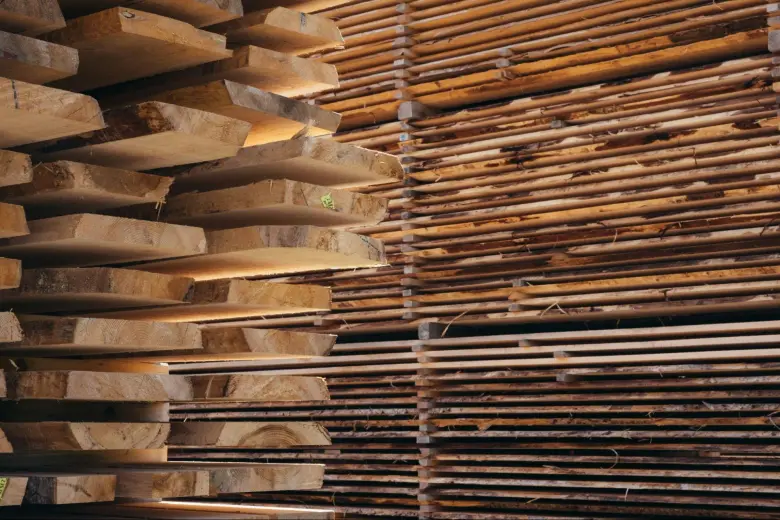
Image Courtesy: Unsplash
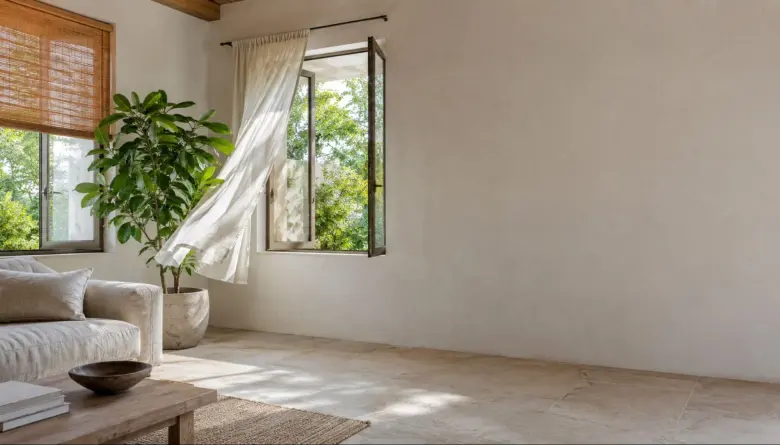
Flooring is crucial for indoor thermal performance. Materials with high thermal mass — such as stone, concrete, and ceramic tile — absorb heat during the day and release it gradually over time. In climates where temperatures cool significantly at night, these materials can help stabilize indoor temperatures and reduce overheating. For example, lightly finished engineered wood might be cooler than hardwood, whereas heavy, dark hardwoods might trap heat.
Recent advances have improved the performance of these traditional materials. Engineered stone products and specialized ceramic formulations can offer enhanced durability while maintaining their cooling properties.
In contrast, materials that trap heat may contribute to warmer interiors. Designers should carefully evaluate flooring choices based on the climate, building orientation, and intended use of the space.
Aerogels and Next-Generation Insulation
Insulation is often associated with keeping buildings warm, but it’s equally important to prevent unwanted heat from entering a space. Aerogels are one of the most advanced insulation technologies currently available. These ultra-light materials contain a network of microscopic pores that dramatically reduce heat transfer.
Although initially developed for aerospace applications, aerogels are increasingly used in commercial and residential construction projects. Thin insulation panels made with aerogel technology can provide excellent thermal performance while preserving valuable interior space. For designers working in urban areas or renovation projects where wall thickness is limited, aerogel-based products can offer significant advantages.

Radiative Cooling Materials
A newer category of materials is attracting significant attention among researchers and building professionals. Unlike traditional reflective surfaces, these materials are designed to release heat directly into the atmosphere. Some advanced coatings can remain cooler than the surrounding air, even when exposed to direct sunlight.
While many radiative cooling products are currently used on building exteriors, interior applications may become increasingly common in the future. As commercialization expands, designers may gain access to wall coverings, ceiling systems and decorative surfaces that actively help cool indoor spaces.
Smart Glass and Interior Applications
Windows are often one of the largest sources of heat gain in a building. Material science has led to the development of smart glass technologies that can help address this challenge.
Electrochromic and thermochromic glass systems can adjust their tint in response to sunlight or user controls. This reduces solar heat gain while preserving views and daylight access.
For interior designers, smart glazing can significantly affect how furnishings, finishes and layouts perform through the day. Reduced solar heat gain can help maintain more stable indoor temperatures while protecting furniture and finishes from UV-related fading.
Smart Textiles and Interior Furnishings
Textiles are no longer passive decorative elements. Material science has transformed them into functional thermal-management systems.
Modern smart textiles can:
- Reflect infrared radiation
- Improve moisture management
- Enhance airflow
- Regulate surface temperatures
Window treatments deserve particular attention. Advanced fabrics with reflective coatings can reduce solar heat gain while still allowing natural light to enter a room.
Similarly, upholstery fabrics designed to dissipate heat can improve occupant comfort in warm climates. These innovations allow designers to combine comfort, aesthetics, and performance in a single solution.
Natural Materials With Modern Applications
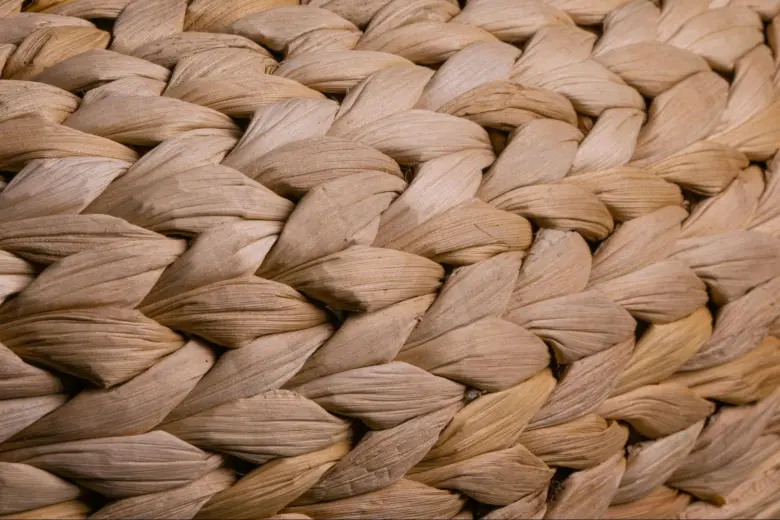
Image Courtesy: Unsplash
Not all innovations involve synthetic technologies. Researchers continue to discover new ways to improve the thermal performance of natural materials.
Materials such as cork, bamboo, hemp, and wood fiber composites provide effective insulation while offering environmental benefits. Many of these materials are renewable, biodegradable, and have lower embodied carbon than conventional alternatives.
In particular, cork has gained attention for its excellent insulating properties, acoustic performance, and design versatility. Its cellular structure naturally traps air, helping regulate temperature while maintaining a comfortable indoor environment.
Moisture Management and Perceived Comfort
Temperature is only one factor that influences comfort. Humidity also plays a major role in how occupants experience indoor environments.
Some advanced materials are designed to absorb and release moisture as levels change. These hygroscopic materials help stabilize indoor humidity, making spaces feel cooler and more comfortable without lowering the actual air temperature.
Clay plasters, wood-based panels, and certain natural fibers are particularly effective at managing moisture levels. For designers focused on wellness-oriented interiors, these materials offer functional and aesthetic benefits.
Combining Passive Cooling With Biophilic Design
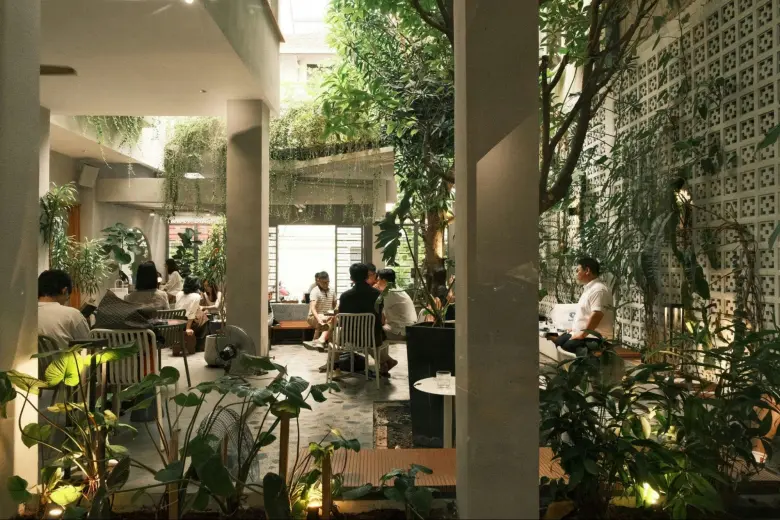
Image Courtesy: Unsplash
Many passive cooling materials work exceptionally well alongside biophilic design principles. Natural materials, indoor greenery, daylight optimization and ventilation strategies can complement one another to create healthier and more comfortable environments.
Green walls, living partitions and plant-integrated design solutions can help moderate temperatures while improving air quality and visual appeal. When combined with thermally efficient materials, biophilic design can enhance sustainability and occupant satisfaction. Additionally, it can bridge the gap between indoor and outdoor areas, making spaces feel bigger and more comfortable.
Integrating Material Science Into Interior Design Practice
Successful passive cooling requires a holistic approach. No single material can solve every thermal challenge. Instead, designers should evaluate how materials interact with one another and with the broader building system.
Factors such as solar exposure, occupancy patterns, ventilation strategies and local climate all influence material performance. Questions designers should consider include:
- Which surfaces receive the most solar exposure?
- Can high-thermal-mass materials be incorporated effectively?
- Would reflective finishes improve daylighting and thermal performance?
- Are there opportunities to introduce phase change materials?
- Can natural ventilation strategies complement material selections?
Collaboration with architects, engineers and sustainability consultants can help ensure that material selections contribute to overall building efficiency.
Biomimicry and Nature-Inspired Cooling Solutions
Image Courtesy: Unsplash
Some of the most innovative passive cooling materials are inspired by nature.
Coatings and surface textures can be modeled after desert plants, beetles, and even termite mounds, which are known for maintaining surprisingly stable internal temperatures despite extreme outdoor conditions. Certain textured materials can enhance airflow across surfaces, while others improve heat reflection or moisture management. As biometric materials become more commercially available, interior designers may find new opportunities to incorporate nature-inspired solutions that improve comfort while supporting sustainable interior design goals.
Retrofitting Existing Spaces With Passive Cooling Materials
Passive cooling is often associated with new construction, but material science innovations can also make a significant impact in renovation projects. Many clients are looking for ways to improve comfort and reduce energy costs without undertaking major structural changes.
Interior designers can often introduce passive cooling strategies through relatively straightforward upgrades. Replacing dark finishes with high-reflectance alternatives, specifying thermally efficient window treatments, incorporating moisture-regulating wall finishes, or selecting furnishings made from cooling materials can all contribute to better thermal performance. In older buildings where architectural modifications may be limited, these material-based interventions can offer a practical path toward improved energy efficiency and occupant comfort.
Color Psychology and Thermal Perception
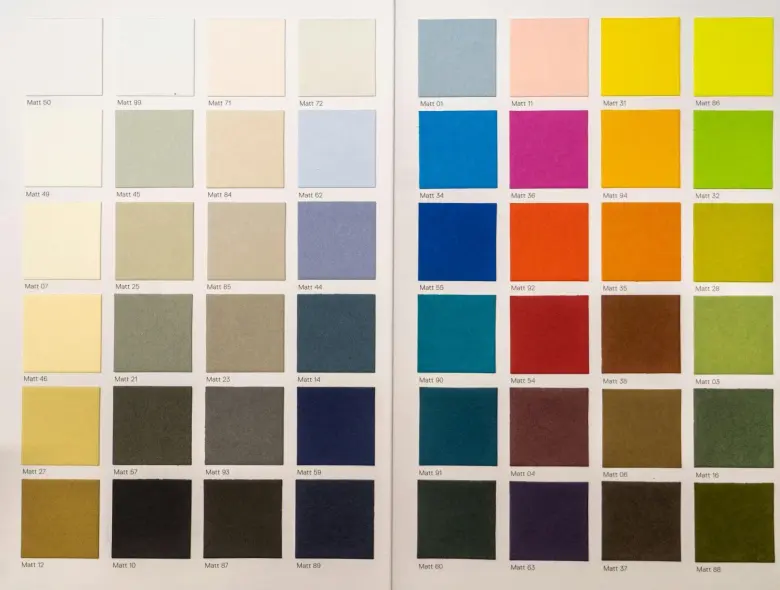
Image Courtesy: Unsplash
Material science and interior design intersect through physical temperature control and through how occupants perceive temperature. Colors and surface finishes can influence how warm or cool a space feels, even when the actual temperature remains unchanged.
Cool-toned color palettes featuring blues, greens, and soft grays are often associated with freshness and comfort. Glossy and reflective finishes can create a lighter, airier atmosphere by enhancing natural light distribution.
Although color choices can’t replace genuine passive cooling strategies, they can complement them by shaping occupants’ thermal perceptions. For interior designers, understanding this relationship offers another tool for creating spaces that feel cooler and more comfortable without increasing energy consumption.
The Future of Passive Cooling
The future of passive cooling lies at the intersection of design, engineering, and material innovation. Researchers are developing surfaces that can radiate heat directly into the atmosphere, coatings that adapt to changing environmental conditions, and materials capable of dynamically responding to indoor temperatures.
Artificial intelligence and smart building technologies may eventually work alongside advanced materials to optimize thermal performance in real time. Interior environments could automatically adapt to occupancy patterns, weather conditions, and client preferences while minimizing energy use. As these technologies become more accessible, interior designers will have an expanding toolkit for creating spaces that remain comfortable even in increasingly warm climates.
FAQs on Passive Cooling and Material Science
Here are some answers to common questions you might have about passive cooling and material science.
Can passive cooling completely replace air conditioning?
In some climates, passive cooling strategies can significantly reduce the need for air conditioning. However, in particularly hot or humid regions, they are often the most effective when used alongside mechanical cooling systems.
What materials are commonly used for passive cooling interiors?
Common passive cooling materials include ceramic tile, natural stone, cork, bamboo, reflective coatings, phase change materials, and advanced insulation products. Each contributes to thermal comfort through heat reflection, storage, or reduced heat transfer.
Why should interior designers care about passive cooling?
Passive cooling helps create more comfortable spaces while reducing energy consumption. It also supports sustainability goals, lowers operating costs, and allows designers to contribute to building performance through thoughtful material selection.
To Sum Up
As temperatures continue to rise and sustainability becomes an important consideration in the built environment, passive cooling through material science is poised to play a larger role in interior design. The most successful interiors will actively contribute to occupant comfort and building performance.
If you want to learn more about interior design, explore AND Academy’s Interior Design Courses. Choose from a Diploma in Interior Design or a PG Diploma in Interior Design to start on your journey! Our courses will teach you how to use different methods to create spaces that are comfortable and aligned with your client’s needs!
Talk to our course advisors to know more!
This Blog was authored by Peter Chambers, an associate editor at Renovated with over 5 years of experience helping readers create beautiful, functional spaces on a budget.
Note: All information and/or data from external sources is believed to be accurate as of the date of publication.